












If you are going to live in Turkey for any length of time, buy property, marry, start a business or take a job, you need to know the basic laws of the country. Visitors staying a week or two should know a few of them as well, if only to avoid an unpleasant situation.
Content:
- How Turkish law differs from what you may be used to
- What a visitor should know
- What a long-term resident should know
- What a property buyer should know
- Work, marriage and family
- Where to turn if something goes wrong
- Popular questions
How Turkish law differs from what you may be used to
It cannot be said that the Turkish laws governing everyday life differ greatly from those accepted across the rest of the world. There are, however, some particularities worth knowing in advance.
Turkey belongs to the civil law tradition, so the law is codified as it is across continental Europe: there is a Civil Code, a Criminal Code, a Commercial Code and a Code of Obligations. Many of them were borrowed from European countries when the Republic was founded and have been rewritten several times since. There is no system of precedent; court decisions follow the text of the law.
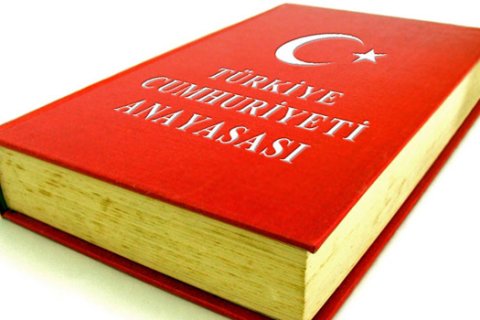
The fundamental law is the Constitution of 1982 as amended in 2017. What it contains, which articles cannot be amended and how the country moved to a presidential republic are set out in our article on the Constitution of Turkey.
The practical difference for a foreigner lies elsewhere: many procedures work differently for citizens and non-citizens. That applies to buying property, taking a job, registering an address and even bringing in a car.
What a visitor should know
Smoking is prohibited in all public places and enclosed spaces, and there is a fine for it. In 2026 it stands at 1,764 TL, about 36 $, and the sums for a venue that allows it are an order of magnitude higher. The ban covers electronic cigarettes as well.
Mount Ararat in the east of the country lies in a border zone under a special regime: climbing it requires a permit arranged in advance through a tour operator.
A few more rules that people tend to learn about at the border or at a police station.
- Taking antiquities out of the country is prohibited under the cultural heritage law and is a criminal offence. That covers old coins, fragments of pottery and mosaic, and stones picked up at archaeological sites. A souvenir from a dig is a charge, not a memento;
- shops do not sell alcohol between 22:00 and 06:00, and advertising it is prohibited;
- flying a drone requires registration with the civil aviation authority, and flights over historic sites and military zones are banned;
- cash above 10,000 euros or the equivalent is declared both on entry and on exit;
- drug offences carry real prison terms, and being a foreigner brings no leniency;
- insulting the state symbols, the president or the memory of Atatürk are separate criminal offences — in Turkey that is not a figure of speech.
How Turkish money works and what limits apply to cash is set out in our article on Turkish currency.
What a long-term resident should know
For a long stay the law matters more than it does for a holiday, because a breach costs you your status rather than just money.
| Subject | What the law provides |
|---|---|
| Visa-free stay | 90 days in any 180; beyond that a residence permit is required |
| Residence permit | Granted on a property purchase from 200,000 $, a lease or another ground |
| Address registration | Compulsory; not issued in neighbourhoods where foreigners exceed 20% |
| Health insurance | Compulsory for a residence permit under the age of 65 |
| Employment | Only with a work permit requested by the employer |
| Tax residency | Arises after more than 183 days in the country in a year |
| A foreign-plated car | May be brought in only by someone who spent 185 days outside Turkey in the year |
The application procedure and processing times for a residence permit are in our article on the ikamet in Turkey, the rules on visa-free stays in the piece on staying in Turkey longer than 60 days, and the conditions for bringing in a car in the article on driving to Turkey.

What a property buyer should know
The procedural laws deserve particular attention: those setting out how property is bought, how marriage and divorce work, and how employment and taxation are handled. This matters all the more because many processes differ for citizens and for foreign nationals.
A foreigner’s right of ownership is protected by the Constitution on the same terms as a citizen’s, but acquisitions are governed by the land registry law, which contains restrictions:
- purchases are prohibited in military and security zones, and the registry checks every parcel;
- no more than 30 hectares of land in one name, and no more than 10% of the area of any district for all foreigners together;
- a buyer of undeveloped land must submit a construction project within two years;
- a report by a licensed appraiser is compulsory for transactions involving foreigners;
- the title transfer fee is 4% and by law is shared equally between the parties.
The full procedure, the documents and the costs on top of the price are covered in our article on the procedure for buying property in Turkey, and what is checked in the title deed in the piece on the TAPU.
Letting has its own rules: the ceiling on rent rises is tied to inflation, the deposit may not exceed three months’ rent, and short-term letting requires a licence and the consent of every owner in the building. The details are in our article on renting an apartment in Turkey.
Work, marriage and family
Employment is governed by the Labor Law: a 45-hour week, a 50% premium for overtime, at least 14 days of leave, and severance pay on dismissal through no fault of the employee. A foreigner needs a work permit, a quota applies and certain professions are closed — all of which is covered in our article on labor legislation in Turkey.
Only a marriage registered with the civil registry office is recognised in Turkey; a religious ceremony has no legal effect. Divorce goes exclusively through the family court, and property is divided under the regime of participation in acquired assets. The procedure and the timelines are set out in our article on the divorce procedure in Turkey.
Where to turn if something goes wrong
- 112 — the single emergency number for police, ambulance and fire service;
- 157 — the YİMER line for foreigners, staffed around the clock and in several languages;
- a foreigner is entitled to a sworn interpreter in any court or administrative proceeding;
- only documents with a sworn translation and notarisation carry legal weight;
- once the ordinary courts are exhausted, an individual application may be made to the Constitutional Court — a route open to foreigners as well.
“Foreigners read up on the purchase rules and the visa rules, and then come unstuck on everyday things: a souvenir from a dig, a drone over a fortress, a cigarette in an enclosed cafe. Each of those is a separate offence, and not knowing is no defence,” a Turkish law practitioner says.
In this section you can read about the laws currently in force in Turkey.
Popular questions
What is the penalty for smoking indoors?
A fine of 1,764 TL in 2026, about 36 $. It covers electronic cigarettes too, and the sums for a venue are an order of magnitude higher.
Can you take an old coin or a stone from a dig out of Turkey?
No. Removing antiquities is prohibited under the cultural heritage law and is a criminal offence.
Do the laws differ for foreigners?
The laws are the same, but the procedures differ: buying property, taking a job, registering an address and importing a car all work differently for non-citizens.
Is a religious marriage recognised?
No. Only a marriage registered with the civil registry office has legal force.
Whom should a foreigner call if there is a problem?
112 for all emergency services, and 157 for the round-the-clock line for foreigners.