





_480x320.jpg)
Turkish cuisine is considered one of the major cuisines of the world along with French and Chinese cuisines. Being a heritage of the Ottoman cuisine, it can be described as a unique fusion of Greek, Caucasian, Balkan and Mediterranean culinary traditions. Traditional Turkish dishes are a variety of color and flavors.
A lot of people think that Turkish food is spicy-hot, but it isn’t so. It is delicately savory with a lot of delicious vegetables which can make vegetarians happy. But, of course, people who eat meat will find something special for them too. Being an Islamic country, the Turkish cuisine is based on lamb and mutton but there are also dishes with beef, chicken, fish and seafood.
How hot the food is depends on the region: in Adana and Gaziantep in the southeast it is genuinely spicy, while on the Aegean coast the cooking is built on olive oil and vegetables and is much milder.
Now, let’s look at the best mouth-watering Turkish dishes that you definitely must try.
Content:
- Top 10 popular Turkish dishes worth trying
- Meat dishes beyond the kebab
- Soups
- Meze
- Home cooking: what Turks eat at home
- Street food
- Sweets and drinks
- Turkish food on the UNESCO list
- Where to eat: how the venues work
- What a foreigner should know
- Popular questions
Top 10 popular Turkish dishes worth trying
1. Kahvaltı
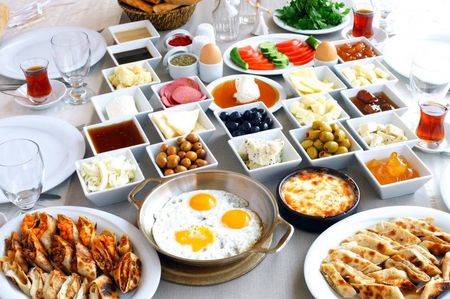
Every Turkish morning starts with Turkish breakfast. And we also decided to start our top-list with it. Kahvaltı is a typical Turkish breakfast and it can easily be named a breakfast champion. Usually it consists of olives, salad, fresh fruits and vegetables, meat, boiled or scrambled eggs, pastries, four kinds of cheese, different kinds of bread, jam, butter, and honey. It is not so much a meal as a format of its own: ten to fifteen small plates arrive at once, the bread keeps coming and the tea is refilled until you stop it. At the seaside and in mountain villages it is served as serpme kahvaltı — a fixed price per person and no choosing, everything comes out.
2. Döner kebab
It is the most famous Turkish dish. You can actually try it in every corner of the world. In Turkey, every region has its own variant of kebab. Thin slices are carved off a slowly turning vertical spit and served in bread with vegetables and sauce. It is a perfect variant to have a snack while walking over the city.
Three ways of serving it are worth telling apart: dürüm, rolled in thin lavash; ekmek arası, in half a loaf; and porsiyon, on a plate with rice and salad. The version served over pieces of bread with tomato sauce, melted butter and yogurt is a different dish altogether — İskender kebap, from Bursa.
3. Pide
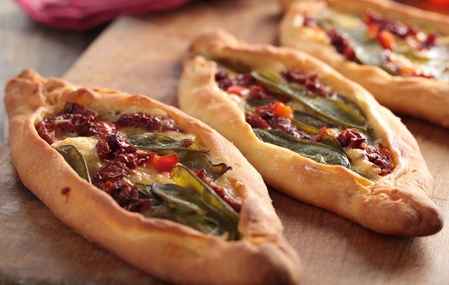
It is a Turkish variant of pizza. Pide is a soft boat-shaped flatbread including different fillings served with sauces and cheese. It is a popular kind of street food in Turkey.
How pide differs from lahmacun and gözleme, and how to order each of them, is covered in a separate article on Turkish pizza.
4. Turkish delight
You cannot imagine Turkish cuisine without Turkish delight, one of the favored treats for those who have a sweet tooth. It has different fillings and flavours and is usually topped with powdered sugar. Its Turkish name is lokum, and the two fillings you will meet most often are pistachio and rose water.
5. Kokoreç
Kokoreç is a Turkish sandwich served with lamb intestines and tomatoes and spices. It may seem strange to eat intestines but just try it and you will see how tasty it is. It is cooked on a horizontal spit, chopped finely on a board and packed into bread. In the cities it is classic food after midnight.
6. Turkish coffee
Famous Turkish coffee is made of medium roast beans in a cezve (a traditional Turkish pot). There are several ways of serving this coffee: plain with no sugar, with a little sugar, with medium sugar and with a lot of sugar. The sugar goes in before brewing, not after, so you are asked how you want it when ordering: sade, az şekerli, orta or çok şekerli. The grounds settle at the bottom and are not drunk.
7. Köfte
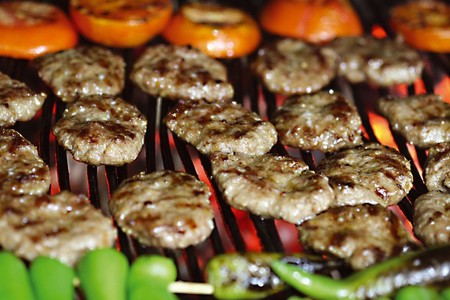
It is a kind of Turkish meatballs made of minced meat with spices and onion served with tomato sauce. Nearly every region has its own version, and the best known is İnegöl köfte from the area around Bursa.
8. Salep
It is a traditional Turkish winter drink. Salep can be a great warmer in the cold winter evenings. This drink is made of special powder which is to be mixed with water or milk and boiled. This drink is thick and sweet which makes it perfect for winter. The same ingredient goes into Maraş dondurma, the stretchy Turkish ice cream that has to be cut with a knife.
9. Börek
It is a kind of Turkish pastry with minced meat, cheese, potatoes or spinach. It can be of different forms: like lasagna or a rolled one. The layered version baked in a tray is su böreği, and the rolled one sold by the slice in the mornings is sigara or kol böreği.
10. Baklava
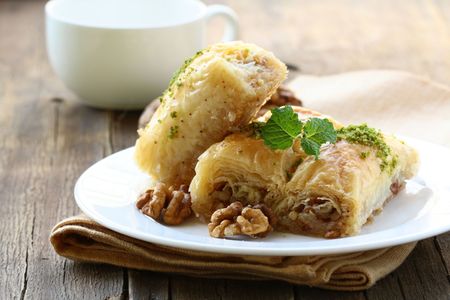
Turkish cuisine is famous for its delicious mouth-watering desserts. One of them is baklava. It is best served in Turkey. Always fresh, topped with pistachios, this nutty pastry dessert can be enjoyed with Turkish tea. The finest comes from Gaziantep, is made with pistachio and carries a protected geographical indication.
Meat dishes beyond the kebab
Half of what local people actually eat never makes it onto a tourist menu.
| Dish | What it is |
|---|---|
| Adana and Urfa kebap | Minced lamb on a skewer. Adana is the hot one, Urfa the mild one; the difference is the red pepper |
| Mantı | Tiny meat dumplings under garlic yogurt and butter with red pepper |
| Testi kebabı | Meat and vegetables baked in a clay pot that is broken open at the table. A Cappadocia specialty |
| Kuzu tandır | Lamb slow-cooked for hours until the meat comes away from the bone |
| Tantuni | Finely chopped meat seared on a large pan and rolled in lavash. A specialty of Mersin |
Soups
Soup, çorba, is eaten at any hour, breakfast included. Three of them are on the menu of almost every canteen.
- Mercimek çorbası — red lentil soup, served with lemon;
- ezogelin çorbası — lentils with bulgur and mint, thicker and hotter than the plain one;
- yayla çorbası — a yogurt soup with rice and mint, served hot or barely warm.
İşkembe çorbası, made from tripe, is regarded in Turkey as a hangover cure, which is why the places serving it stay open until morning.
Meze
Meze are the small cold and hot dishes that open a long meal, many of them based on strained yogurt: haydari with mint and garlic, ezme of finely chopped tomato and pepper, patlıcan salatası of smoked aubergine, and hot ones such as mushrooms baked with cheese or karides güveç, prawns with tomato and garlic in a clay dish.
Meze are not ordered from a menu: a waiter brings a tray and you point at what you want. The bill counts plates, so it is worth asking the price of one before you start.
Home cooking: what Turks eat at home
Kebab is restaurant food. At home the cooking is different, and these dishes, ev yemekleri, make up the everyday diet.
- Kuru fasulye — white beans in tomato sauce with rice, the unofficial national dish;
- karnıyarık — aubergine stuffed with minced meat, onion and tomato;
- imam bayıldı — the same without meat, cooked in olive oil and eaten cold;
- pilav — rice with vermicelli, the side dish to almost everything;
- mercimek köftesi — lentil and bulgur patties with no meat and no frying.
Street food
| Item | Where you find it |
|---|---|
| Simit | A sesame ring from carts everywhere, the cheapest food in Turkey |
| Balık ekmek | Fried fish in bread, by the water in Istanbul and the port towns |
| Midye dolma | Mussels stuffed with spiced rice, served with lemon from evening trays |
| Kumpir | A baked potato mashed with butter and cheese, with any toppings you choose |
| Mısır | Boiled or grilled corn, all year round |
Sweets and drinks
Sweet things are not eaten after dinner but on their own, later in the evening, and there are dedicated places for them: muhallebici for milk puddings and baklavacı for pastry.
- Künefe — shredded kadayıf pastry with melting cheese inside, served hot, from Hatay;
- sütlaç — rice pudding baked until the top browns;
- dondurma — the stretchy ice cream of Kahramanmaraş, made with salep and mastic;
- kazandibi — a milk dessert with a deliberately caramelized base.
Tea is drunk all year round, in tulip-shaped glasses, and refilled endlessly. Ayran is salted and goes with meat. Şalgam, a sharp juice of red turnip and carrot, is drunk with kebab in the south.
Turkish food on the UNESCO list
Three food-related entries from Turkey are on the UNESCO Representative List of the Intangible Cultural Heritage of Humanity.
| Entry | Year | What it is |
|---|---|---|
| Ceremonial keşkek tradition | 2011 | A dish of wheat and meat cooked in cauldrons at weddings and festivities |
| Turkish coffee culture and tradition | 2013 | The roasting, grinding and brewing in a cezve together with the ritual of serving |
| Flatbread making and sharing culture | 2016 | Lavash and katyrma, an entry shared with several countries of the region |
Where to eat: how the venues work
In Turkey the sign over the door tells you the menu and the price.
- Esnaf lokantası — a canteen for locals: home cooking on display, you point at what you want, and lunch costs less than anywhere else;
- ocakbaşı — a grill in the middle of the room, kebabs and meat over charcoal;
- pideci and lahmacuncu — a bakery with a wood-fired oven;
- meyhane — an evening place for meze and rakı, where people settle in for hours;
- muhallebici — milk puddings and desserts, often open late;
- kahvaltı salonu — breakfasts, usually until midday and then closed.
What a foreigner should know
There is no pork in ordinary Turkish venues. The meat is lamb, beef and chicken; pork is sold only in a few specialist shops in the big cities and tourist areas, at a high price.
During Ramadan most places work as usual, but in conservative districts some close during the day, and in the evening, at the breaking of the fast, every table is taken — book ahead.
Vegetarians have it easier than they expect: a whole branch of the cuisine, zeytinyağlılar, is cooked in olive oil without meat and served cold. Soup stock, though, is usually meat-based, and that is worth asking about separately.
Nuts are everywhere in Turkish desserts — pistachio and walnut are in almost everything sweet, ice cream and lokum included. Anyone with an allergy has to check every time.
“Newcomers eat döner for six months and think they know Turkish food. The real thing starts where there are twenty pots of home cooking on the counter and nobody speaks English,” says a guide who runs food tours.
Popular questions
What is the main dish in Turkey?
There is no single one. In a restaurant it is kebab in dozens of forms; at home it is kuru fasulye with rice, white beans in tomato sauce.
What is the difference between dolma and sarma?
Dolma is a stuffed vegetable, a pepper or an aubergine. Sarma is a filling wrapped in a leaf, usually a vine leaf. The two are constantly confused.
Is there pork in Turkey?
Not in ordinary venues. It is sold only in a few specialist shops in the large cities and tourist areas.
What should be tried first?
A proper Turkish breakfast, İskender kebap, mantı and künefe. Those four say more about the cuisine than any döner on a seafront.
Is Turkish food spicy?
It depends on the region. The southeast is genuinely hot; the Aegean coast is mild and built on olive oil and vegetables.