




Where are apartments more expensive, in Turkey or in Russia? What are the main differences between the two kinds of property, and between the locations, the climate and the standard of living around them? Buyers weighing a seaside purchase in the two countries run into these questions constantly, and the honest way to answer them is with figures rather than adjectives.
Content:
- Price per square meter: a direct comparison
- The Russian Black Sea market
- Where apartments cost more
- Eight factors that shape the price in Turkey
- How Russian properties differ from Turkish ones
- What to consider before buying in Turkey
- Popular questions
Price per square meter: a direct comparison
Below is the average price of a square meter at the resorts of the two countries in the autumn of 2026, brought to one currency.
| City | Price per sq m |
|---|---|
| Sochi | 5,592 $ |
| Gelendzhik | 3,514 $ |
| Anapa | 3,274 $ |
| Bodrum | 2,590 $ |
| Istanbul | 1,346 $ |
| Alanya | 1,215 $ |
| Antalya | 1,148 $ |
| Mersin | 732 $ |
The conclusion is unambiguous: even Bodrum, the most expensive Turkish market, costs less than Anapa, and a meter in Antalya is a fifth of the price of one in Sochi. Average apartment prices tell the same story.
| Market | Average apartment price |
|---|---|
| Sochi | 197,000 $ |
| Gelendzhik | 168,000 $ |
| Anapa | 157,000 $ |
| Bodrum | 341,000 $ |
| Alanya | 132,000 $ |
| Turkey on average | 108,000 $ |
Converted at 48.33 lira per dollar for September 2026.
The Russian Black Sea market
Interest in the Russian Black Sea coast is driven mainly by buyers from Moscow, St Petersburg and the Urals, and prices there keep climbing. Between August 2025 and August 2026 new-build prices in Sochi rose by 14.2%, while Gelendzhik and Anapa each added 7.2%. An average apartment in Sochi now costs about 197,000 $, in Gelendzhik 168,000 $ and in Anapa 157,000 $.
The market picked up during the pandemic, when closed borders pushed buyers who had been looking abroad towards domestic resorts. That demand has not gone away, but the price gap with Turkey has widened considerably since.
Where apartments cost more
A few years ago the two markets were broadly comparable. Today the Russian Black Sea resorts cost two to five times more per square meter than the Turkish ones. What a foreign buyer gets for the money differs as well.
A residence permit. Buying property in Turkey gives the right to apply for a residence permit, but not for any purchase, as used to be the case: since October 2023 the property must be worth at least 200,000 $ and be registered as housing.
Citizenship. A property worth from 400,000 $ opens the route to Turkish citizenship, family members included. The threshold was raised from the earlier 250,000 $ in June 2022.
Running costs. The recurring expenses are the annual property tax, the aidat and the utilities. What they add up to over a year is set out in our article on the cost of maintaining property in Turkey.
Mortgages. Turkish banks quote housing loan rates per month rather than per year, and in the autumn of 2026 they run from 2.6 to 3.7% a month. Borrowing is therefore expensive, and most foreign buyers pay from their own funds or use a developer’s installment plan.
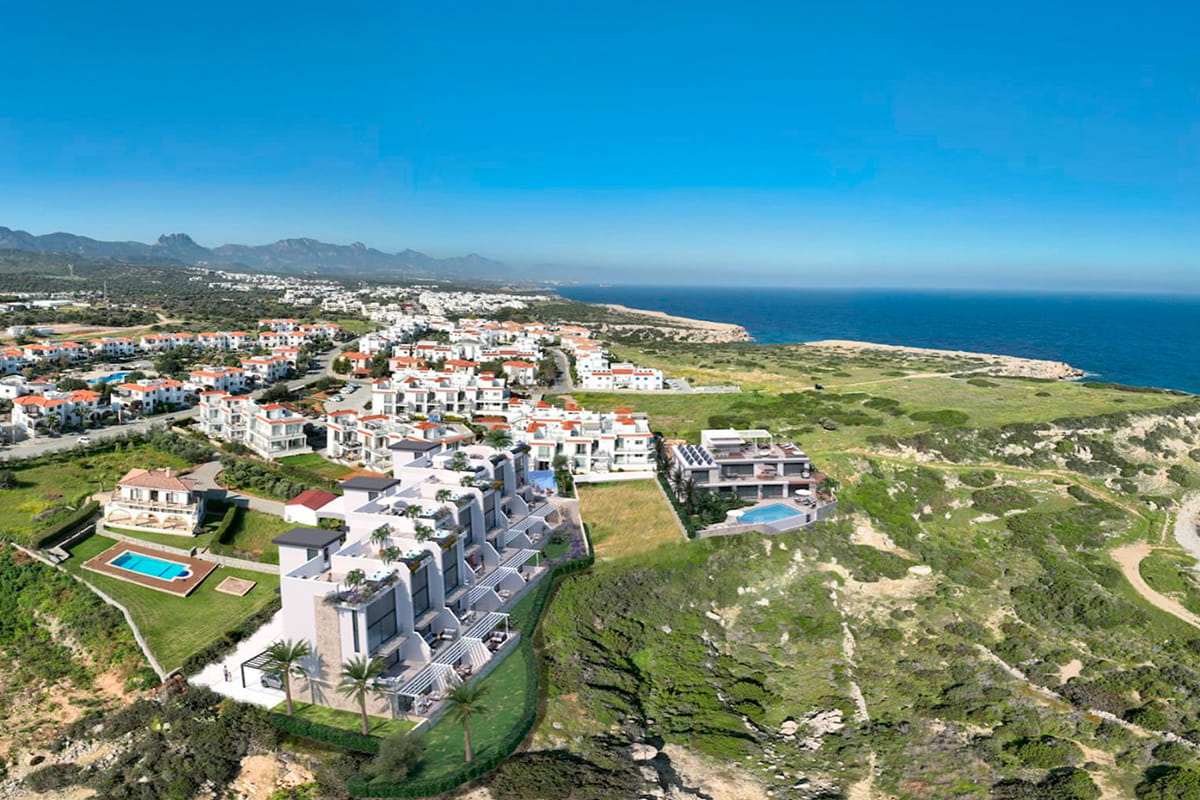
In practical terms, a 100 sq m apartment in Antalya comes to about 115,000 $ at the average price per meter, and a two-bedroom of 55 to 75 sq m in Alanya to between 67,000 and 91,000 $. At that level apartments are often sold furnished and equipped, in complexes with a pool, a sauna, a hammam, a gym and a security post.
One point of geography worth clearing up: Mahmutlar, often described as a district of Antalya, actually belongs to Alanya. Alanya is in Antalya province but is a separate town, 130 km from the city itself.
Eight factors that shape the price in Turkey
- Distance to the sea. The gap between the front line and a block two kilometers inland reaches a third of the price;
- the city and the district: a meter in Bodrum costs three and a half times one in Mersin;
- the age of the building. Since the 2023 earthquakes buyers pay a premium for construction to the 2018 standards;
- whether the iskan, the occupancy certificate, has been issued: without it a property is cheaper but riskier;
- the amenities of the complex. A pool, a hammam and security raise the price and the aidat at the same time;
- the floor and the view. Upper floors with a sea view cost more but heat up badly in summer;
- furnishing: apartments are usually sold with a fitted kitchen and appliances, and that is in the price;
- the stage of construction. Off-plan is cheaper, but the money is tied up for two or three years.
What the different formats of housing are and what the layout codes mean is explained in our article on the types of real estate in Turkey.
How Russian properties differ from Turkish ones
The climate. Even the south of Russia is cooler than the north of Turkey, let alone the Turkish resort towns on the Mediterranean.
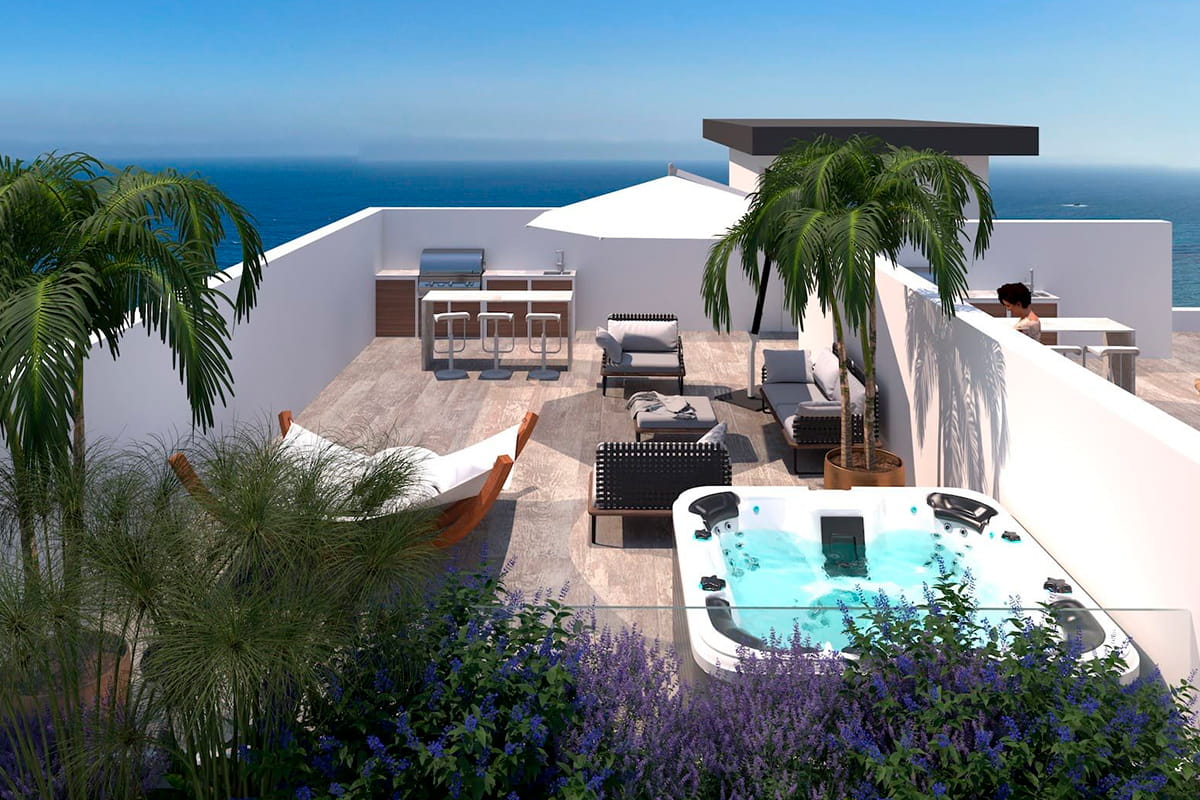
The complexes. Turkish developments, economy class included, normally come with a gym, a sauna or hammam, and indoor and outdoor pools, all of which residents use at no extra charge beyond the aidat. Larger projects add spa salons, shops and beauty centers, and the most expensive ones have private beaches reached through a covered passage from the building.
Incomes, quoted without cross-country comparisons: the Turkish minimum wage in 2026 is 33,030 TL before deductions, and the minimum pension from July is 23,552 TL. Inflation is high and both figures are revised twice a year.
Ownership. A foreigner in Turkey receives full freehold title with the right to sell, gift or bequeath the property, and above the thresholds it also serves as grounds for residence. A domestic purchase in Russia carries no such status but requires no dealing with a foreign legal system or language.
What to consider before buying in Turkey
- Costs on top of the price, 5 to 7%: the title transfer fee, the valuation, sworn translation and DASK insurance;
- currency risk. Prices are set in lira or dollars while the buyer’s income is often in another currency, and the rate reshapes the budget within months;
- short-term letting has required a Ministry of Culture and Tourism license and the consent of every owner in the building since 2024, so quick rental income is not a given;
- running costs continue all year: the aidat is charged whether the owner visits or not;
- ownership is evidenced by the TAPU, and that is what to check — the type of deed and the designation of the property.
What the title deed contains and how to read it is covered in our article on the TAPU, and the mechanics and pitfalls of letting in the piece on renting an apartment in Turkey.
“Comparing the price per meter is not enough. In Russia a buyer pays for the meter; in Turkey for the meter plus the amenities of the complex, which are then paid for through the aidat. These are two different models, and in the second the costs are spread across every year of ownership,” a specialist in transaction support in Turkey says.
Popular questions
Where is it cheaper, Turkey or the Russian Black Sea?
Turkey. A meter in Antalya costs about 1,148 $ against 5,592 $ in Sochi and 3,274 $ in Anapa. Even Bodrum, the priciest Turkish resort, is cheaper than Anapa.
Does buying in Turkey give a residence permit?
Yes, if the property is worth from 200,000 $ and registered as housing. Citizenship starts at 400,000 $.
Can a foreigner take a mortgage in Turkey?
Yes, but in the autumn of 2026 rates run at 2.6 to 3.7% a month. Most buyers pay from their own funds or use a developer’s installment plan.
What does it cost to keep a Turkish apartment?
The main items are the aidat, the property tax, utilities and DASK insurance. The aidat is charged regardless of whether anyone lives there.
Which is easier to let out?
Long-term letting. Short stays require a license and the written consent of every owner in the building.