




Ask which Turkish drinks people know and the answer is usually the same: coffee and tea. There is a great deal more to it than that, and the non-alcoholic half of a Turkish bar has no real equivalent anywhere else. Here are the drinks locals and visitors alike come back to, along with what to say when ordering them.
Content:
- Turkish coffee
- Turkish tea
- Ayran
- Salep
- Boza
- Rakı
- Şalgam
- Şerbet and lemonade
- What to know about buying alcohol
- What is drunk when
- Popular questions
Turkish coffee
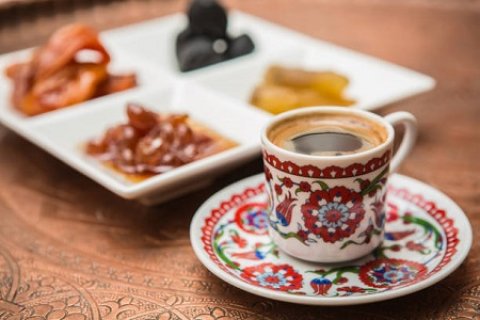
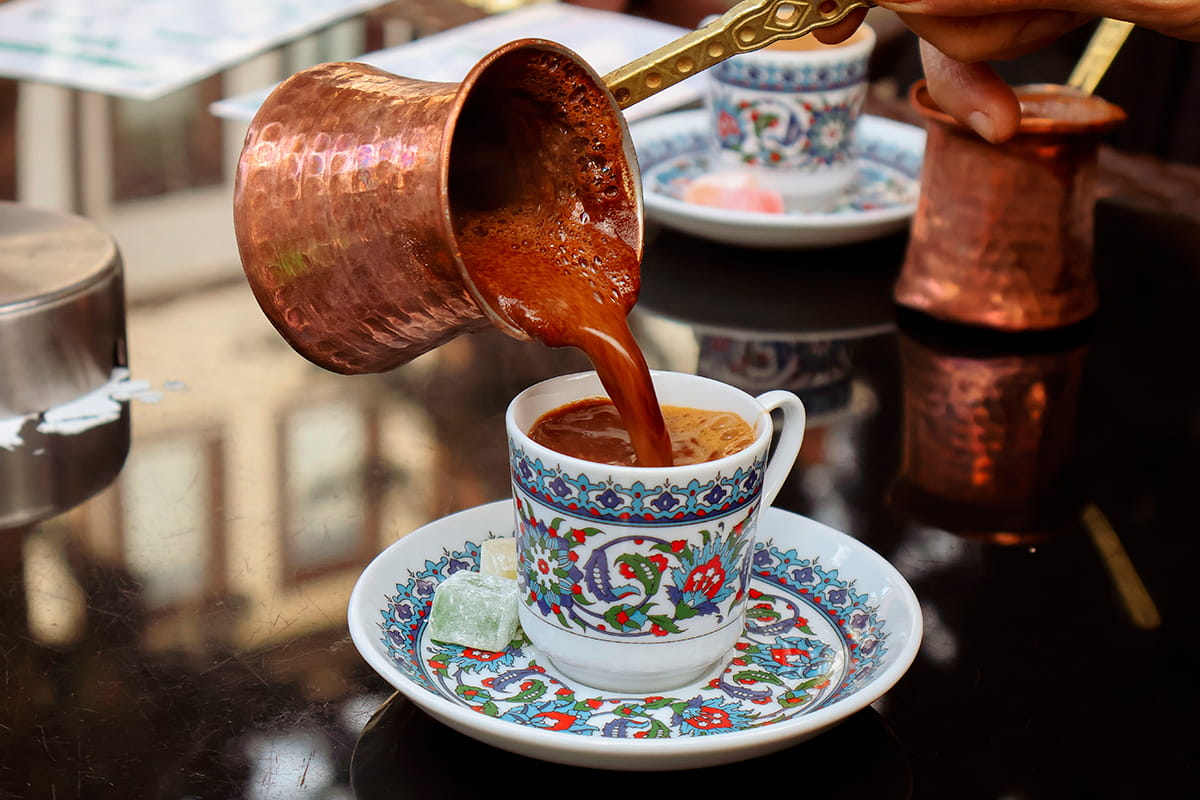
Coffee in Turkey is strong and thick, brewed in a cezve and served in tiny cups called fincan. The beans are roasted dark and ground almost to powder, and the sugar goes in during brewing, never after, so as not to spoil the foam on top.
Hence the main rule of ordering: the sweetness is stated up front. Sade is without sugar, az şekerli slightly sweet, orta medium and çok şekerli sweet. It is the first thing the waiter will ask.
The culture and tradition of Turkish coffee has been on the UNESCO Representative List of the Intangible Cultural Heritage of Humanity since 2013. It comes with a glass of water and usually a piece of lokum. The grounds are not drunk, and the cup is turned over onto the saucer afterwards: reading the grounds is part of the same ritual rather than a show for tourists.
Turkish tea
Until the 1920s the national drink was coffee. After the end of the Ottoman Empire, Yemen — the source of that coffee — lay outside the country, prices rose, and tea began to be grown domestically on the Black Sea coast around Rize, still the main tea-growing region today.
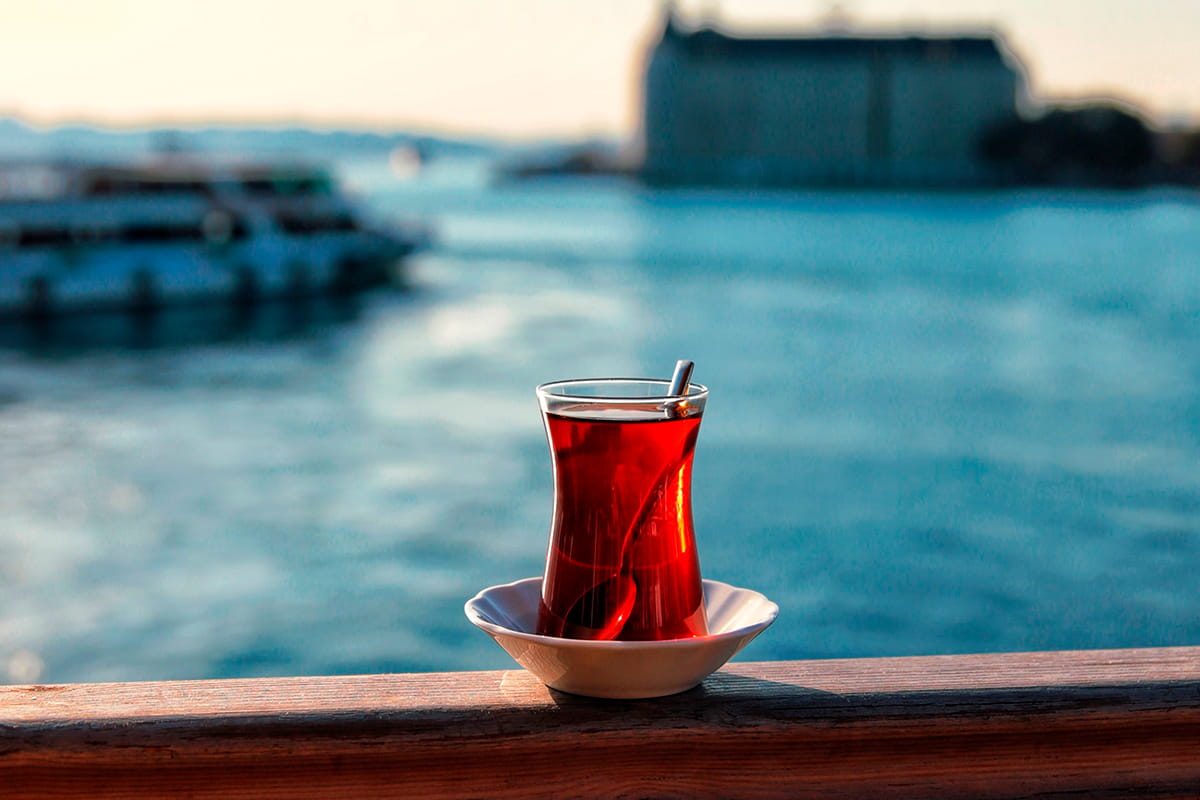
Tea is now the national drink, and locals will tell you a day without it is a day wasted. It is brewed in a çaydanlık, a double kettle: strong tea in the upper pot, boiling water in the lower one. The strength is adjusted in the glass, so you order açık, weak, or koyu, strong. The colour considered ideal is described as tavşan kanı, “rabbit’s blood”: a deep amber red.
It is served scalding hot in small tulip-shaped glasses. Alongside plain black tea, herbal infusions of apple, rosehip and linden are widely drunk.
Ayran
Ayran is a refreshing frothy drink of yogurt whisked with water and salt. The salty taste surprises first-time drinkers, but it works in the heat, which is why it is served with kebab, dürüm, gözleme and anything else off the grill.
At a place with a charcoal grill it is worth asking for yayık ayranı, the churned homemade version with a dense head of foam and a fuller taste than the bottled kind. That is what locals drink.
Salep
Salep is a hot milk drink for cold evenings, made from the dried tubers of wild mountain orchids and dusted with cinnamon. It has a long history as a restorative, a cold remedy and a sedative.
One detail matters for anyone wanting to try the real thing: the orchids are protected, the raw material is expensive, and most of the powders sold in supermarkets are flavoured starch blends. Genuine salep is served in patisseries and costs noticeably more.
The same ingredient goes into the ice cream of Kahramanmaraş — together with mastic it is what makes it stretchy.
Boza
Boza is a thick, sweet, slightly sour fermented drink with a faint tang of beer. The Turkish version is made from millet: the grain is cooked down, then sugar and a starter are added and it is left to ferment. Neighbouring countries use wheat, maize or barley, but the classic Turkish boza is millet-based. The alcohol content is minimal, around one percent.
It is strictly a winter drink, sold from autumn to spring, and the bozacı shuts for the summer. It comes in a glass with cinnamon on top and roasted chickpeas, leblebi, to eat alongside.
Rakı
Rakı is a strong anise spirit, drunk diluted with water, which turns it milky white. It is made by distillation rather than infusion: grapes or raisins first yield a spirit called suma, which is then distilled a second time together with aniseed in copper stills of no more than five thousand liters. Aniseed, not anise root, and a distillate, not a wine infusion. Turkish rakı carries a protected geographical indication and all its raw materials must be grown in Turkey.
The white colour of the diluted drink gives it the nickname aslan sütü, “lion’s milk”. It is not drunk in shots but slowly, across a whole evening, and always with food: fish, meze, and melon with white cheese. That style of table is called a rakı sofrası and counts as a tradition in its own right.
Şalgam
Şalgam is a dark red juice of black carrot and turnip, fermented with bulgur and salt. It is salty, sour and often hot, so visitors approach it carefully, while in Adana and Mersin in the south no kebab order is complete without it.
When ordering, the strength is specified: acılı with chilli, acısız without. The second is the better place to start.
Şerbet and lemonade
Şerbet is the general name for sweet non-alcoholic infusions of fruit, flowers and spices — pomegranate, rosehip, rose, tamarind. In Ottoman times şerbet was the drink of the table; today it appears mostly at weddings and religious holidays.
The simpler summer standard is limonata, a homemade lemonade with mint, made in almost every cafe and sold bottled in any shop.
What to know about buying alcohol
Alcohol is sold legally in Turkey, but the rules differ from what many visitors expect.
- Shops may not sell alcohol between 22:00 and 06:00; bars and restaurants are not affected;
- excise duties are high, so imported drinks cost noticeably more than in Europe while local rakı, wine and beer are better value;
- advertising alcohol is prohibited, and shop windows keep it out of view from the street;
- in conservative districts and smaller towns alcohol may not be sold at all — that is a municipal decision rather than a national rule;
- sales to under-18s are prohibited and chain stores do ask for identification.
What is drunk when
| Drink | Season | What it goes with |
|---|---|---|
| Tea | All year | Breakfast, after meals, any conversation |
| Turkish coffee | All year | A glass of water and lokum, usually later in the day |
| Ayran | All year, especially summer | Kebab, pide, gözleme |
| Şalgam | All year | Kebab in the south, often alongside rakı |
| Salep | Winter | In the evening, with cinnamon |
| Boza | Winter | With cinnamon and roasted chickpeas |
| Rakı | All year | Fish, meze, melon with white cheese |
| Lemonade | Summer | In the heat, instead of a soft drink |
What all of this is eaten with, and how Turkish meals are put together, is covered in our article on traditional Turkish food, and how to pronounce the names and order what you want is in our short Turkish phrasebook.
“Visitors try coffee, ayran and rakı and think they have met Turkish drinks. Half of the drinking culture here is winter-only: salep and boza simply are not on sale in summer,” says a guide who runs food tours.
Popular questions
What is rakı made from?
Grapes or raisins are turned into a spirit called suma, which is distilled a second time with aniseed. It is a distillate rather than an infusion, and it holds a protected geographical indication.
How do you order Turkish coffee?
State the sweetness up front: sade for no sugar, az şekerli slightly sweet, orta medium, çok şekerli sweet. Sugar is not added after brewing.
Why is Turkish tea served in small glasses?
The tulip glass holds the heat and lets the tea be drunk scalding. The strength is adjusted on the spot: açık for weak, koyu for strong.
What is salep and when is it drunk?
A hot milk drink made from wild orchid tubers, drunk in winter. The genuine article is served in patisseries with cinnamon; supermarket powders are usually substitutes.
Until what time is alcohol sold?
Shops sell until 22:00, after which sales are prohibited until six in the morning. Bars and restaurants are not affected.