




Many people know that Turkey is an excellent destination for a beach holiday, with a network of hotels to suit every taste and budget.
That is far from the country’s only advantage.
Our experts have put together an article on some of the features of life in the Republic of Turkey, to give you a fuller picture of the country.
Content:
- Nature and climate
- Cultural diversity
- Landmarks
- The local mentality
- The state language of Turkey
- Religion
- Opening hours of public institutions
- Holidays
- Transport
- Real estate in Turkey
- Turkey in figures
- Popular questions
- We will help you buy property in Turkey
Nature and climate
It is widely known that the Turkish coast enjoys some three hundred sunny days a year, a hot summer and a gentle sea. Those conditions, however, do not apply everywhere. The country has three main climate zones: the Mediterranean south and south-west with hot dry summers and mild rainy winters, the Black Sea north with high humidity and rain all year round, and continental inner Anatolia, where summers are hot and winters bring snow and frost.
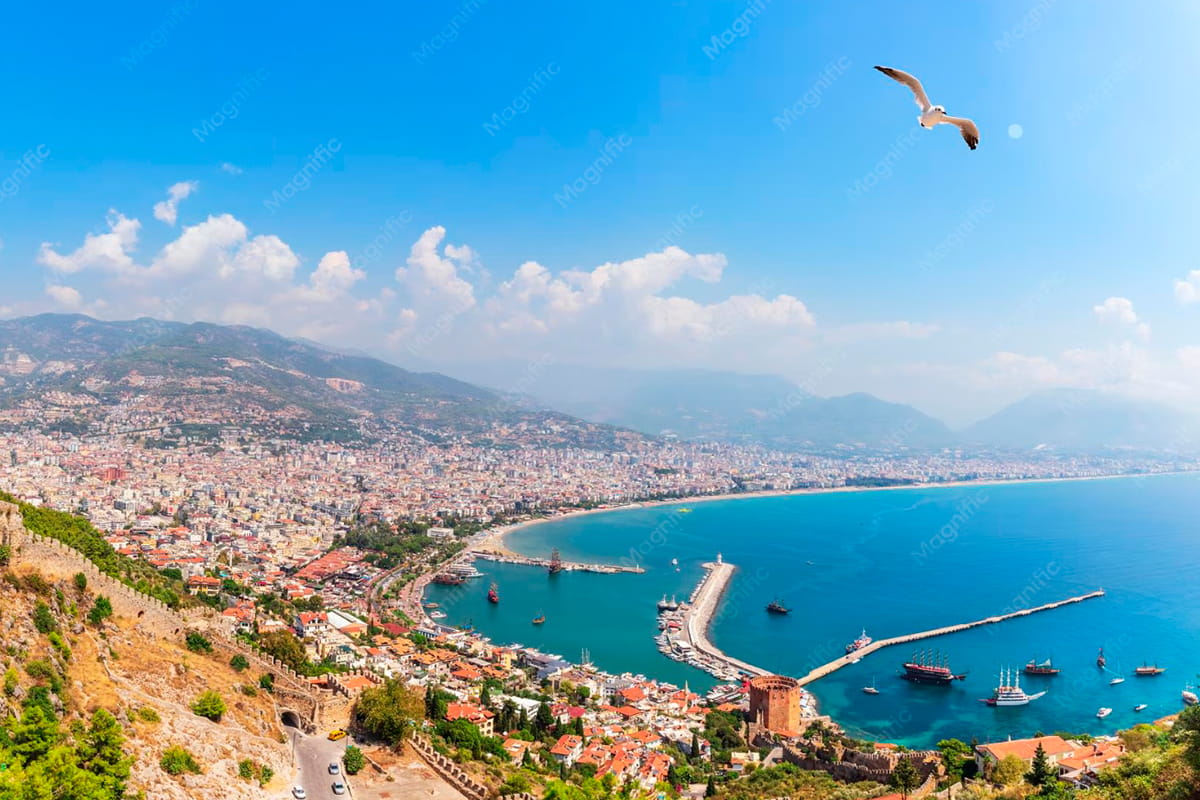
For many foreign buyers of Turkish property, the pleasant climate is one of the reasons for the purchase, and most often they choose the coast of one of the seas that wash the country: the Mediterranean, the Aegean, the Marmara and the Black Sea. The swimming season on the Mediterranean coast runs from May to October and starts a couple of weeks later on the Aegean.
Cultural diversity
Turkey is a country with a character of its own. The first thing you notice on a first visit is the hospitality of the locals, who are open and friendly towards newcomers. In the coastal resorts and the large cities other traditions are treated with respect, and xenophobia is not something you run into.
The population is 86.3 million people, the figure TÜİK gives for mid-2026. The overwhelming majority are Turks and Kurds, with around 16% accounted for by other groups: Armenians, Zazas, Greeks, Crimean Tatars, Russians and Ukrainians, Circassians, Chechens, Arabs, Azerbaijanis and others. One important caveat: Turkey keeps no official statistics on ethnic composition — the census does not ask about ethnicity, so every share quoted in any source is an estimate.
Despite the clear predominance of two groups, other cultures are treated with tolerance and nobody is required to give up their nationality. Russians, for instance, successfully build communities where they keep their traditions, speak their language and celebrate their own holidays.
Landmarks
The history of this land began further back than a modern person can easily imagine. It is the cradle of the oldest cities and empires, and monuments thousands of years old are remarkably well preserved here. The country has a wealth of tourist attractions, and 22 sites are inscribed on the UNESCO World Heritage List:
- Hierapolis and Pamukkale;
- Selimiye Mosque;
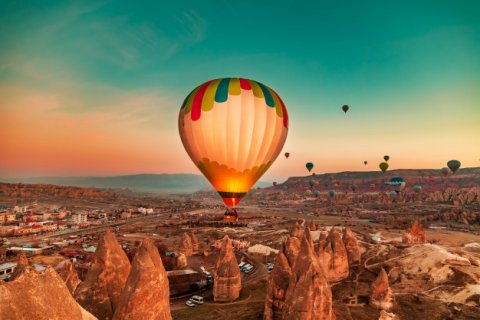
- Göreme National Park and the rock sites of Cappadocia;
- The city of Safranbolu;
- Hattusha, the Hittite capital;
- The historic areas of Istanbul;
- Ephesus;
- Mount Nemrut;
- Troy;
- The Great Mosque and Hospital of Divrigi;
- Pergamon;
- Çatalhöyük, a Neolithic settlement;
- Diyarbakir Fortress and the Hevsel Gardens;
- Bursa and Cumalikizik;
- Xanthos and Letoon;
- The city of Ani;
- Aphrodisias;
- Göbekli Tepe;
- Arslantepe Mound, inscribed in 2021;
- Gordion, the Phrygian capital, added in 2023.
Two of the 22 sites hold mixed status, natural and cultural at once: Göreme with Cappadocia, and Pamukkale.
Living in Turkey means having these unique monuments of history and ancient culture close at hand.
The local mentality
The local mentality is an important feature of any country. It is what sets one people apart from another and shapes the details of life in that society.
Turks are known for being sociable, welcoming, emotional and good-natured. They strike up conversation easily and are open to contact. They like talking about food and about their country, and in the resorts and large cities they are friendly towards foreigners.
Another trait is a lack of hurry. Turks do not rush or fuss, so delays and late arrivals are not unusual.
Nor can one forget the art of haggling, which belongs on any list of Turkish traits. Any local bazaar is the place to try it.
Traditions and customs, religious ones included, are held in high regard here, and in recent years young people have been notably involved in keeping religious traditions alive.
Turks are courteous towards older people — not only their own parents and grandparents, but passers-by and elderly neighbors as well.
Children are adored in this country. Every adult gives them attention, treats them and spoils them, and that applies not only to their own children but to everyone else’s too.
Local traditions, customs and mentality make adapting quick and relatively easy for newcomers.
The state language of Turkey
Turkish is the official state language. If you are planning to live here permanently it is better to start learning it, at least once you have moved, though in the beginning you can get by without it.
For short trips English or Russian will do: they are understood in all the resort areas and the large cities. In government offices, clinics and banks, however, the conversation is in Turkish, which is why people who move usually start with language courses at the municipality or at a private school.
Turkish is not particularly difficult to learn, though it has its own logic. With regular practice you can reach a level sufficient for everyday conversation fairly quickly.
Religion
The vast majority of the country’s residents are Muslim. If a child’s parents do not belong to another officially recognized religion, the child is registered as Muslim. Since 2006, however, the religion field on the identity document can be left blank or changed on request, and since 2017 the information is no longer printed on the card itself.
Religion is separate from the state but plays an important role in public life, and many everyday norms follow Islamic tradition. In the big cities and the resorts religious influence is modest: restrictions on clothing, education or work are not observed. Deeper inside the country, where tourists are rare guests, the norms of Islam matter a great deal.
Besides Muslims, Turkey is home to Christians and Jews practicing their own faiths. Their communities are small: the Armenian and Greek Orthodox churches, Catholics, Protestants and the Jewish community of Istanbul.
Opening hours of public institutions
Schedules in Turkey differ from what many newcomers expect, and it is worth planning around them.
| Institution | Opening hours |
|---|---|
| Government offices, land registry, migration authority | 08:30 to 17:00 on weekdays, with a lunch break of about an hour |
| Banks | 09:00 to 17:00 on weekdays; branches stay open over lunch |
| Shops and malls | Until 22:00; large malls also open at weekends |
| Markets | One or two days a week in each district, from early morning until evening |
| Pharmacies | Normal hours; at night and on holidays a duty pharmacy, nöbetçi eczane, is open |
On public holidays offices and banks are closed entirely, and on the eve of religious holidays only the first half of the day is a working one. A calendar with the dates is collected in our article on holidays in Turkey.
Holidays
Turkey celebrates both religious and secular holidays: the New Year familiar to everyone, national days such as Children’s Day on April 23 or Youth Day on May 19, and many others. Among the most popular are:
- Kurban Bayramı, the Feast of the Sacrifice. An Islamic holiday celebrated on a grand scale, lasting four days and giving the country a long break. Tradition calls for slaughtering a ram or other livestock, cooking the meat and sharing it with those in need, with neighbors, friends and relatives.
- Sünnet, an important family celebration for Muslims: the day of a boy’s circumcision. No particular age is prescribed. The tradition goes back a long way and is closely observed to this day: the boy is dressed up, guests are invited and a generous table is laid.
- New Year. It is celebrated much as it is everywhere else, though mostly in the larger cities; in small settlements it often goes unmarked.
- National Sovereignty and Children’s Day on April 23 — an important day for the whole country, dedicated to the younger generation, with concerts and performances.
Besides the official and religious holidays, Turks are fond of festivals: there are festivals of grapes, of porcelain, of pomegranates, of carrots and of güveç stew, among others.
Transport
The transport system in Turkey is well developed and offers plenty of modern options: city buses and minibuses, metro and tram lines in the larger cities, high-speed trains, ferries and domestic flights.
The most popular way to get around is the dolmuş, a small shared bus. They are convenient in the resort areas, and the fare depends on the length of the route and is paid in cash or with a transport card.
You can also take a taxi, found at a dedicated rank or outside any large hotel. The fare is set by the meter, and in the larger cities taxis are ordered through apps.
Istanbul and Ankara have a metro, tram lines and a monorail. In Istanbul, since July 2026 a single ride costs 42 TL, a Marmaray journey starts at 34 TL and the monthly Mavi Kart pass costs 3,298 TL.
Buses are usually more convenient than trains, with exceptions. High-speed YHT trains link Ankara with Istanbul, Konya and Sivas and make travel between those cities quick and comfortable; there is no high-speed line to Izmir yet, which is served by conventional trains and flights.
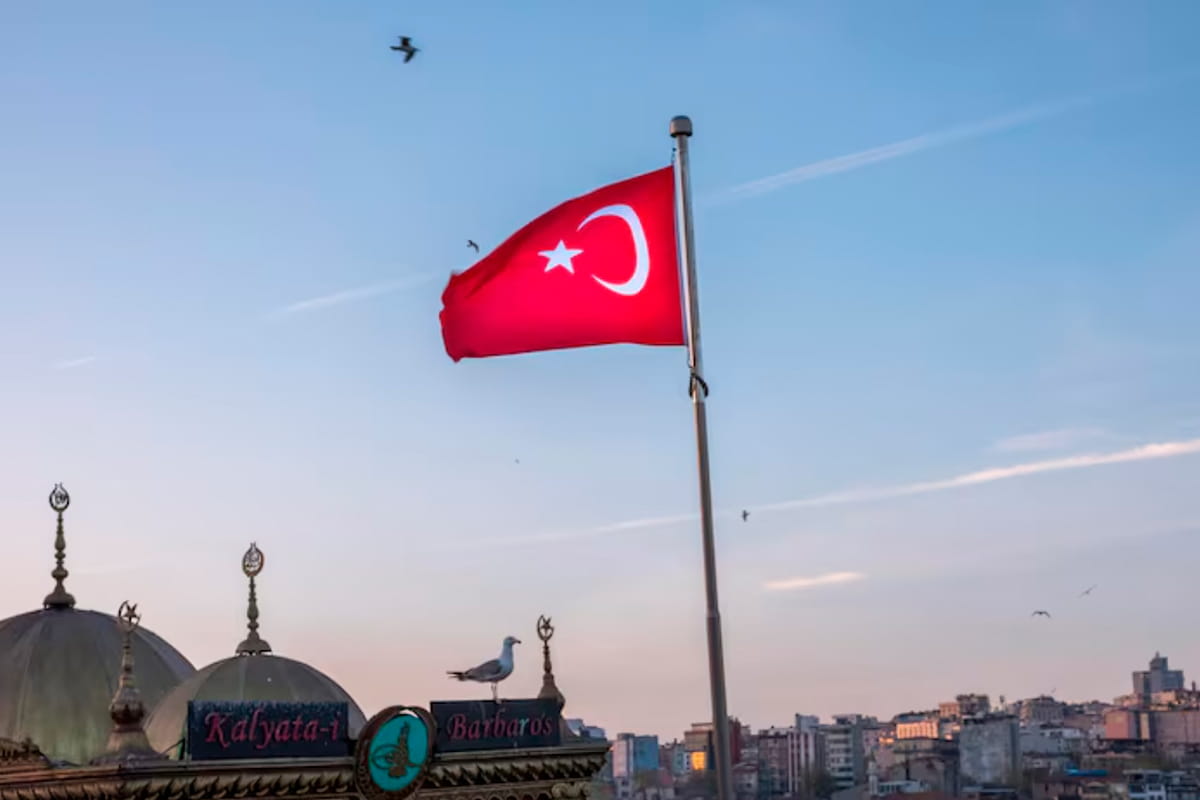
Water transport connects the European and Asian sides of Istanbul, and ferries also run to the Turkish coast from neighboring countries, including the Greek islands of Rhodes, Kos, Chios and Lesbos.
Within the country and beyond it you can travel with Turkish Airlines and other carriers.
Another way to stay mobile is to rent or buy a car. Most Turks prefer to rent, as buying and running a car is expensive: the main reason is the ÖTV excise duty, which multiplies the price of a vehicle. Rental offices operate in every large city and resort, and rates depend heavily on the season — summer on the coast is noticeably dearer than winter.
Real estate in Turkey
A comfortable life anywhere depends not only on the local culture and infrastructure but on the availability of good, affordable housing. The Turkish property market is developing actively and growing year by year. Foreigners buy homes in the big cities and at the resorts, although their activity has cooled in recent years: they closed 5,681 transactions in January to April 2026, 11.6% fewer than a year earlier.
The advantages of buying property in Turkey include:
- the chance to obtain a residence permit with a purchase appraised at $200,000 or more, and citizenship with a purchase from $400,000, with resale barred for three years;
- high quality of Turkish construction;
- a developed real estate service sector with European standards of service;
- a wide variety of properties;
- affordable prices;
- buying an apartment in Turkey is a reliable and promising investment.
Buyers from abroad are particularly drawn to the Mediterranean coast, to Istanbul and to the Aegean. Foreigners can find a property to match their own requirements, from modest resale studios to luxurious villas and penthouses in new developments. As a price guide, the national average is 41,703 TL ($863) per square meter and 5.21 million TL ($108,000) for an average apartment, according to Endeksa data for July 2026. Resorts cost more and industrial regions less.
Which documents are checked before a deal and what the recorded status of the right means is covered in our article on the TAPU.
Turkey in figures
A summary of the main indicators for 2026.
| Indicator | Value |
|---|---|
| Population | 86.3 million (July 2026) |
| Area | 783,600 km² |
| UNESCO sites | 22, two of them with mixed status |
| Foreigners holding residence permits | 1,237,343 (May 2026) |
| Tourists in 2025 | 64 million, fourth place in the world |
| Average square meter of housing | 41,703 TL ($863) |
| Official public holidays | 9 |
Popular questions
What is the ethnic composition of Turkey?
The main groups are Turks and Kurds, with around 16% accounted for by other peoples. Precise figures do not exist: the census does not ask about ethnicity, so every share quoted is an estimate.
What religion is followed in Turkey, and in what proportions?
The vast majority of residents are registered as Muslim. Since 2006 the religion field can be left blank, and since 2017 it is no longer printed on the identity card, so there are no recent official shares. There are also Christian communities and a Jewish one.
How many people live in Turkey?
86.3 million as of mid-2026. The largest city is Istanbul with 15.75 million residents.
How many UNESCO sites does Turkey have?
22, including Göbekli Tepe, Cappadocia, Pamukkale, Ephesus and the later additions of Arslantepe and Gordion.
What language is spoken in Turkey?
The state language is Turkish. English and Russian are understood in the resorts and large cities, but government offices operate in Turkish only.
We will help you buy property in Turkey
If Turkey and its property market interest you, we offer verified and reliable listings from our catalogue. We have selected promising offers from leading Turkish developers, agencies and private sellers across the country at fair prices. Choose the options that match your criteria and start your search for quality Turkish property right now.