






Each country has its own rules for issuing visas and citizenship, benefits, and the difference between them. There is a legal gap between residence and citizenship, the difference between them is nominal, and foreign nationals are not usually permitted to have citizenship at all, only resident cards.
Turkey, of course, has its own position on this issue, and it can be placed between the first and second groups.
The system of issuing visas and citizenship in Turkey, however, is not very complicated, and in this article, we will try to clarify this issue where possible.
Content:
- Residency and citizenship: differences, conditions, and how to issue them
- "Residency permit" and citizenship by investment
- Residency or citizenship: a side-by-side table
- Benefits of a resident visa and a citizen’s passport
- Who citizenship by investment will not suit
- What changed in the rules by 2026
- Popular questions
- Conclusion
Residency and citizenship; differences, conditions, and how to issue them
We will start by clarifying the terminology and move on, analyzing the difference between residence and citizenship in Turkey.
The difference between "Residency Permit" and citizenship
Although residence in Turkey can be issued via visas or residency permits, the laws have a decisive theory of what such residence in the country is.
The legislative field has two concepts: "Residency Permit" and "Citizenship".
Residency permits in Turkey are numerous and touch on the main purposes of visiting the country: there are residency permits for study, medical care, tourism, work, business, and trade.
Of course, there is also a "Residency Permit", which is what is of interest to us.
In general, such residency can be divided into 3 large groups; short-term, long-term, and tax residency.
A short-term residency permit is issued for a maximum of 2 years at a time, and for investors for up to 5 years. It can be renewed as many times as needed, as long as the grounds remain and the applicant still meets the requirements.
A long-term residency permit is granted for an indefinite period when a foreigner wants to reside in Turkey but does not want to apply for citizenship.
Although there are many conditions for obtaining a long-term permit, the most frequent one is to renew a short-term permit until the period of stay in Turkey is sufficient to approve a long-term permit.
Tax residency is not a residency in the literal sense. It arises automatically once a person spends more than 183 days in Turkey within a calendar year: from that point they declare their income to the Turkish treasury.
Citizenship is an alternative to a long-term permit and makes a foreigner a citizen of the country without any restrictions.
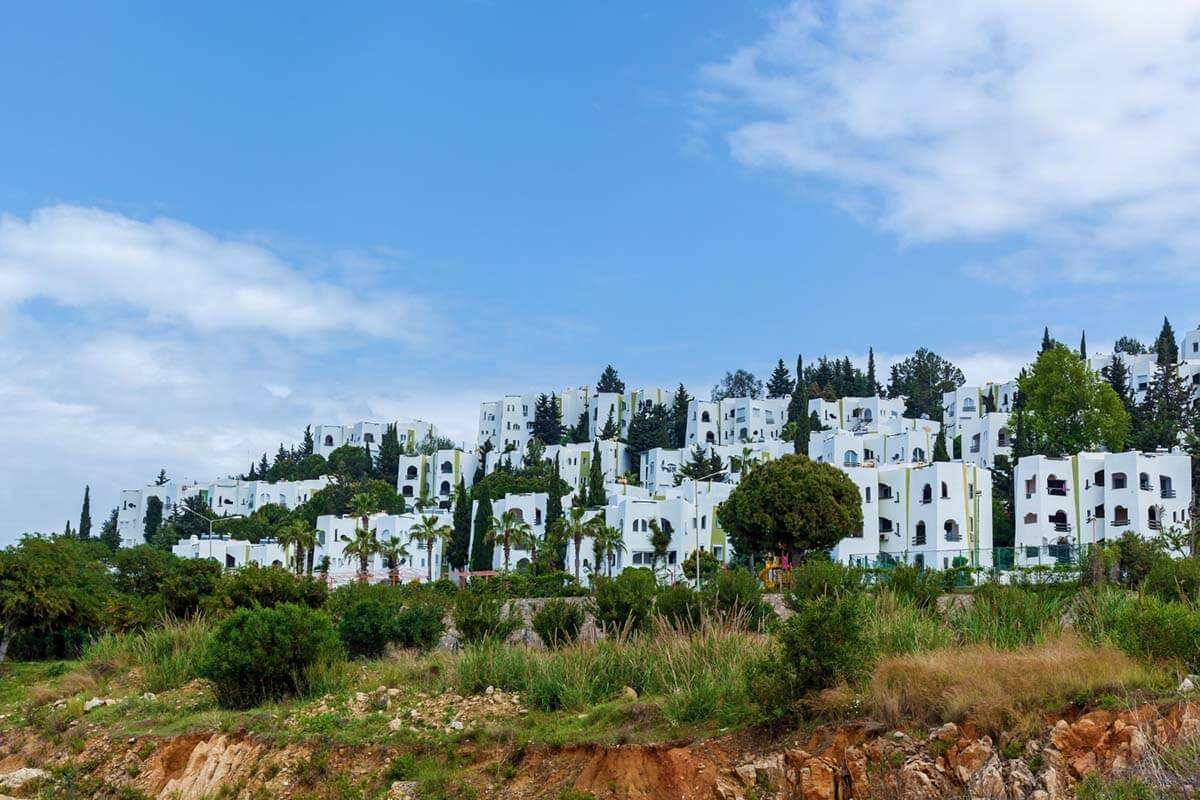
Under what conditions can you be granted a "Residency permit" or citizenship?
Short-term residency permit
A short-term residency permit is granted to foreigners who want to stay in Turkey longer than the visa-free period allows, and who have grounds for it. For Russian citizens that period is 60 days in a row and no more than 90 days in total per half-year.
The application is filed online at e-ikamet.goc.gov.tr, after which the applicant visits the migration office once with the original documents. There is no need to report every six months: the next visit comes only at renewal, and the renewal application is filed 60 days before the card expires.
If you need to obtain such a work permit, you do not apply for a residence permit separately — the work permit replaces it. The first one is issued for up to 1 year, the first extension runs up to 2 years and subsequent ones up to 3 years with the same employer. After 8 years of legal residence you can request an open-ended work permit.
In all other cases, for example, for study or treatment, or a business trip, you can be granted this visa for the duration of your stay in the country. For students (until graduation), and for patients (until the end of treatment).
There are no special restrictions and requirements to obtain such a permit. Everything you need to provide:
- Indicate the purpose of your stay in the country and the necessary documents.
- Provide identity documents that are not forged or expired.
- Have a place to stay that meets sanitary and safety standards, confirmed by a notarized rental agreement or a title deed.
- Provide documents on criminal record, must not be on the international wanted list.
- Provide the address where you will reside in the country — it has to be in a neighborhood open to foreign registration.
- Confirm an income of at least 1.5 times the minimum wage, which is 42,112.50 TL ($871) per month in 2026.
- Take out health insurance for the whole validity of the permit (mandatory for applicants under 65).
The full breakdown of the procedure, documents and costs is in our separate guide to the ikamet in Turkey.
Long-term residency permit
To get a long-term residency permit, you have two main options:
- Stay in Turkey for at least 8 years for regular extension of a short-term visa.
- Be an investor.
The second route comes with a caveat: an investor receives a short-term permit for up to 5 years rather than an open-ended one straight away. A separate option for major investors and sought-after professionals is the Turkuaz Kart, the turquoise card: for the first 3 years it works as a transition period, after which it grants an open-ended right to live and work in the country.
To obtain a long-term residency permit for 8 years or more, you must meet the following requirements:
- Live in Turkey for a certain period without interruptions: over the last 5 years you may spend no more than 365 days outside the country in total and no more than 6 months on any single trip.
- Not receive social assistance for the last three years to confirm your solvency.
- Have a permanent income to meet basic needs.
- Have valid health insurance.
- Have no history of violating the law and public order.
If you are an investor, it makes sense to consider Turkish citizenship. As pointed out above, residency and citizenship are equivalent to each other, and you can choose one of them depending on your goals.
You can refuse to fulfill the requirements to obtain citizenship and rather opt for a long-term permit.
Thus, the requirements are as follows:
- Invest in real estate for $400,000 or more — that has been the threshold since June 13, 2022, and the old figure of $250,000 no longer applies. The title deed carries a note barring resale for 3 years.
- Invest over $500,000 in shares of a Turkish company.
- Invest more than $500,000 in government bonds, an investment fund (including a real estate investment fund), or deposit the amount in a Turkish bank account — in all these cases the money is locked in for 3 years.
- Create a commercial enterprise providing more than 50 jobs.
Two thresholds should not be confused. The $400,000 buys citizenship. A residence permit through property comes with a purchase from $200,000 by a licensed appraiser’s valuation, but it does not lead to a passport on its own.
A residency permit is a necessary stage for obtaining citizenship, except in cases when you can invest the sums of money mentioned above.
"Residency permit" and citizenship by investment
Let us briefly focus on investments required to obtain a residency permit or citizenship.
Investments in general
There are no restrictions for foreigners to invest in Turkey. They can buy government bonds, invest in funds, buy shares of Turkish companies, invest in promising businesses, and startups, and open their own business independently or with anyone else.
There are several exceptions for professions related to pharmaceuticals, legal issues, and maritime affairs, but you can work and conduct commercial activities in any sector of the economy.
About real estate investments
This point takes into account both the direct purchase of a property for personal use and for earnings through the fund. You can spend the amount on one housing unit or several, with the option to buy real estate anywhere in the country, except for places of military or national importance.
The best options are Istanbul and its surroundings, as well as the southern and western coast of Anatolia.
There are 4 types of real estate options (excluding those that you can purchase for commercial use): flats, apartments, condominiums, and villas.
A deal made for citizenship carries restrictions that are rarely spelled out. The valuation for this program is produced only by the state company GEDAS, ordered through the Web Tapu system, and the report is valid for 90 days. Payment is accepted solely by bank transfer, with the currency exchanged through a Turkish bank and a DAB certificate issued; cash means rejection. You cannot buy from another foreigner, from your own company or from close relatives, nor can you buy a property that has already been used in someone else’s citizenship application.
"The most common mistake is measuring the threshold by the contract price. For citizenship only the GEDAS report counts, and it often comes in below the figure agreed with the seller. Buyers then have to make up the difference with a second property," says a lawyer who handles citizenship transactions.
Residency or citizenship: a side-by-side table
| Criterion | Short-term permit | Long-term permit | Citizenship by investment |
|---|---|---|---|
| What it takes | Grounds, income of 42,112.50 TL a month, insurance, an address | 8 years of uninterrupted residence | From $400,000 in property or from $500,000 in other assets |
| Validity | Up to 2 years, up to 5 for investors | Open-ended | For life, passed on to children |
| Waiting time | A decision within 90 days | Up to 90 days after filing | From six to eight months, longer when agencies are busy |
| Money locked in | No | No | Yes, for 3 years |
| Who is included | Everyone applies individually | Everyone applies individually | Spouse and children under 18; parents are not |
| Military service | No | No | Only for men who receive the passport before 22 |
Benefits of a resident visa and a citizen’s passport
Obviously, you need a permit to be in the country.
However, there is a question of benefits when you have options; to choose citizenship or a long-term permit.
Both options allow you to stay in the country indefinitely. In both cases, you can apply for a family visa and bring your relatives to Turkey.
The first difference is inheritance. If you are a citizen of Turkey or are married to a citizen of this country, the child receives citizenship at birth.
If the child’s parents do not have citizenship, they must obtain a residency permit for the child within six months. If the parents have a long-term permit, the child receives a similar one.
Unlike a residence permit, a foreigner cannot be deprived of citizenship, except in cases when the foreigner acts against the country, in terms of treason in one form or another, regulated by law.
According to the Law No. 6458 "On Foreigners and International Protection", article 44 states that overseas citizens who have received a long-term residency permit enjoy the same rights as Turkish citizens, except for:
- Compulsory military service.
- The right to vote and be elected.
- Work in public and state organizations.
- Be exempt from taxes when importing vehicles.
Citizens also receive several more important bonuses:
- The ability to visit 113 international destinations, including Hong Kong, Japan, and Singapore, either in visa-free or the "Visa on Arrival" mode (obtaining the necessary permits upon arrival in the country). In the Henley ranking of July 2026 the Turkish passport sits in 44th place. The Schengen area is not on that list: Turkish citizens still apply for European visas on general terms;
- Simplify obtaining visas to the United States, for example, an E–2 investor visa is valid for 5 years and is renewable. This refers specifically to the E-1 and E-2 treaty business visas, for which Turkey is a treaty country; US tourist visas are issued on the same terms as to everyone else;
- Access to full medical care in public institutions.
- Pension and free university study programs.
Moreover, you have no bureaucratic obstacles to obtaining these documents.
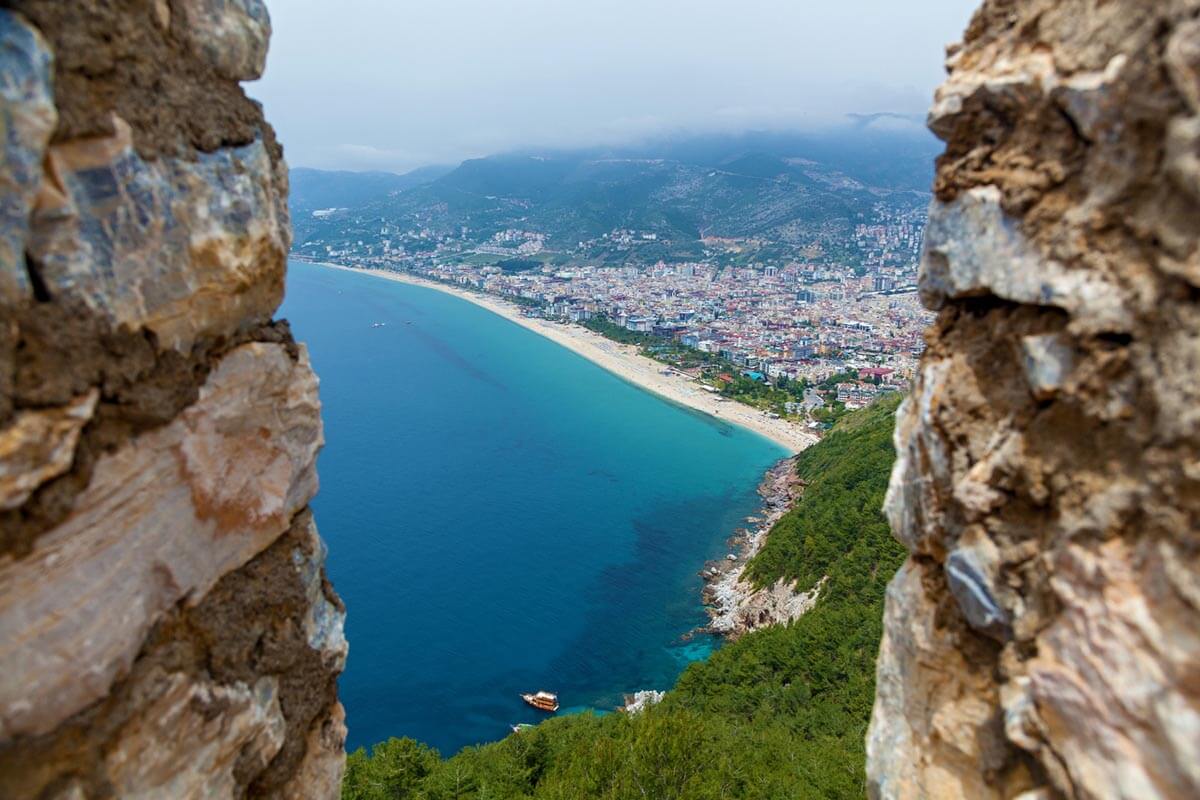
Who citizenship by investment will not suit
The program does not solve every task, and some applicants are disappointed after they have already paid. Five cases where a residence permit is the better choice.
The first is counting on Europe. A Turkish passport gives no visa-free entry to the Schengen area, and the ETIAS rules do not apply to it.
The second is an unwillingness to lock up capital. Property cannot be sold for 3 years, deposits and bonds stay in Turkish assets for the same period, and the lira rate may eat part of the gain along the way.
The third is a large family. Only the spouse and children under 18 are included in the application. The investor’s parents do not receive citizenship and have to apply for an ordinary residence permit.
The fourth is being unable to travel. The applicant and the spouse submit biometrics in person, and that step cannot be done remotely. Everything else can be handled by power of attorney.
The fifth is the need for a guarantee. Naturalization remains discretionary: checks are run by the intelligence service, the police and the migration authority, two requests go to Interpol, and the source of funds is examined under anti-money-laundering law No. 5549. A refusal is possible even when the conditions are met.
What changed in the rules by 2026
- The property threshold has been $400,000 since June 13, 2022; the figure of $250,000 still circulating on many websites is out of date.
- A criminal record certificate for the applicant and spouse has been mandatory since January 2024 and is valid for 6 months.
- Since March 1, 2024, valuations for citizenship purposes are produced only by GEDAS and ordered through Web Tapu.
- The KKM deposit scheme was closed by the Central Bank on August 23, 2025, so that route for placing $500,000 no longer works.
- The threshold for a residence permit through property has risen to $200,000 and is now the same nationwide.
- Citizenship applications take from six to eight months, and longer when the agencies are busy.
Popular questions
How much does Turkish citizenship cost in 2026?
The minimum investment is $400,000 in property, with resale barred for 3 years. The alternatives cost more: from $500,000 in company capital, government bonds, an investment fund or a bank deposit.
Do you have to live in Turkey to get the passport through the program?
No. There is no residence requirement, language exam or interview, but the applicant and spouse must come in person to submit biometrics.
After how many years of residence is citizenship granted without investment?
After 5 years of continuous legal residence. A long-term residence permit, by contrast, requires 8 years.
Is citizenship revoked if the property is sold?
After 3 years the property can be sold: the note is lifted from the title deed and citizenship remains. Selling earlier means refusal or annulment.
Do you have to give up your current passport?
No. Turkey allows dual citizenship and does not require you to renounce your previous nationality.
Conclusion
Long-term residency does not impose any additional obligations on you and can be terminated at any time, while citizenship makes you subject to Turkish laws in all their severity. For men that includes military service. The rule is straightforward: anyone who is 22 or older when the passport is granted counts as having served and is not called up. Younger applicants remain liable unless they served at home and can document it.
In the end, Turkey allows you to have dual citizenship, so you will not need to renounce the citizenship of your home country.