





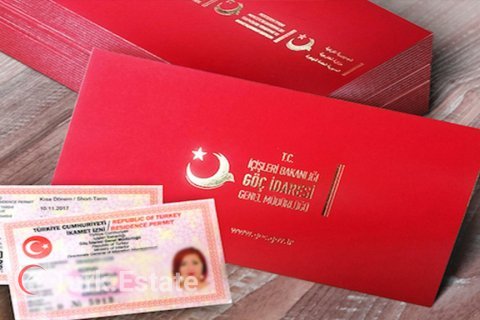
To stay in the Republic of Turkey legally for a long period, a foreign citizen needs a special document — the ikamet.
This is a residence permit whose holder has the right to live in the country legally for the entire period of its validity.
The document matters to foreigners who plan a long or permanent stay abroad, so our specialists have prepared a detailed guide on what the ikamet is, why it is needed and how to get it.
Content:
- What is an ikamet card in Turkey?
- What does a residence permit in Turkey give you?
- Advantages of a residence permit in Turkey
- Who does not need an ikamet
- Grounds for obtaining a residence permit in Turkey
- Ikamet in Turkey: new rules and requirements for applicants
- The application procedure
- Where applications usually fail
- Validity of the residence permit
- Ikamet refusal: specifics and reasons
- Ikamet rules: what changed in 2026
- Popular questions
- We will help you buy property and get an ikamet
What is an ikamet card in Turkey?
The ikamet is a residence permit issued by the Turkish authorities to foreign citizens for a legal long-term stay in the country. That is its main purpose. Legal residence also opens up a number of additional opportunities for foreigners.
After five years of continuous legal residence in the country, a foreigner may apply for Turkish citizenship.
A residence permit brings obligations as well as opportunities. The ikamet itself does not create tax liability, but a foreigner who spends more than 183 days in Turkey within a calendar year becomes a tax resident and declares income to the Turkish treasury.
As of May 2026, foreigners held 1,237,343 valid residence permits in Turkey, 430,063 of them short-term. Year after year, more foreign nationals want permission to stay in Turkey long term.
What does a residence permit in Turkey give you?
Advantages of a residence permit in Turkey
An ikamet opens up the following opportunities for foreign citizens:
- Living in a country with an affordable cost of living. Turkey is known for moderate prices on food, clothing and essentials. Life here costs less than in Russia or European countries, for example.
- Access to quality medical services in local healthcare facilities.
- The prospect of a European-level education.
- The chance to develop your own business and career.
- Living in a country with a pleasant climate and a fast-growing economy.
Every foreign citizen has their own reasons for legalizing their stay in Turkey. Some move for the comfortable climate, others choose a European education or the chance to work abroad. A third group receives a residence permit together with a Turkish property purchase. This modern country can satisfy very different needs, which is why Turkey remains one of the most popular destinations among foreigners who decide to move abroad.
Who does not need an ikamet
Not everyone who visits Turkey regularly needs an ikamet. Citizens of many countries, including Russia, enter without a visa and may stay up to 60 days in a row, but no more than 90 days within any 180-day period. As long as your trips fit within that limit, there is no reason to apply for a residence permit.
Four scenarios where the document is not required:
- Holidays and short trips. Two or three weeks by the sea several times a year are fully covered by visa-free entry.
- Owning property without living in it. The TAPU gives you the right to own the property and rent it out, and the owner pays utility bills and property tax without an ikamet.
- A remote transaction. Property can be bought, registered and sold through a power of attorney, without being in Turkey.
- Work under a contract. A work permit is itself a ground for legal residence, so no separate residence application is filed.
The ikamet becomes mandatory once your stay exceeds 90 days per half-year: studies, medical treatment, family in Turkey, wintering, remote work from the country. The difference is financial too — the paperwork costs 5,500 to 8,500 TL per adult, and the procedure has to be repeated every year.
Grounds for obtaining a residence permit in Turkey
The law sets out specific grounds for this document:
- family reunification;
- marriage;
- business and investment in the Turkish economy;
- buying property;
- official employment in the country;
- studies at a Turkish university;
- medical treatment in local healthcare facilities;
- tourism and other long stays beyond the visa-free period;
- humanitarian reasons.
Some of these grounds are used more often than others. Here are the most common ones in detail.
Family reunification
This is one of the most frequent reasons for requesting a residence permit. It is issued to spouses and minor children of citizens or permit holders for up to 3 years and cannot exceed the validity of the sponsor’s own permit. The sponsor confirms an income of at least the minimum wage plus one third of the minimum wage per family member: in 2026 that means 28,075.50 TL ($581) for the sponsor and 9,358 TL ($194) for each relative. When marrying a Turkish citizen, the spouse receives a residence permit right after submitting the application and the documents confirming the marriage. Foreign papers require an apostille. An ikamet granted on the basis of marriage remains valid even in the event of a divorce.
Business and investment in the Turkish economy
Launching your own business or investing in local companies is another common ground for a long-term legal stay in the Republic of Turkey. Foreign citizens may open a company or become shareholders in a joint-stock company. Registering an organization takes about 10 days. To apply for a residence permit, you submit the papers confirming that the business has been set up.
Ikamet through a property purchase
Under Turkish law, buying property is also a ground for a residence permit. Since October 16, 2023, a monetary threshold applies: the appraised value of the property in a licensed appraiser’s report must be at least $200,000. The former split between large cities and sparsely populated areas has been abolished, and the limit is now the same across the country. The appraisal counts rather than the contract price, and the property must be residential — commercial premises and land plots do not qualify. What matters is the fact of ownership of an apartment in Turkey, a villa, a house or another property, proved by the TAPU, the title deed.
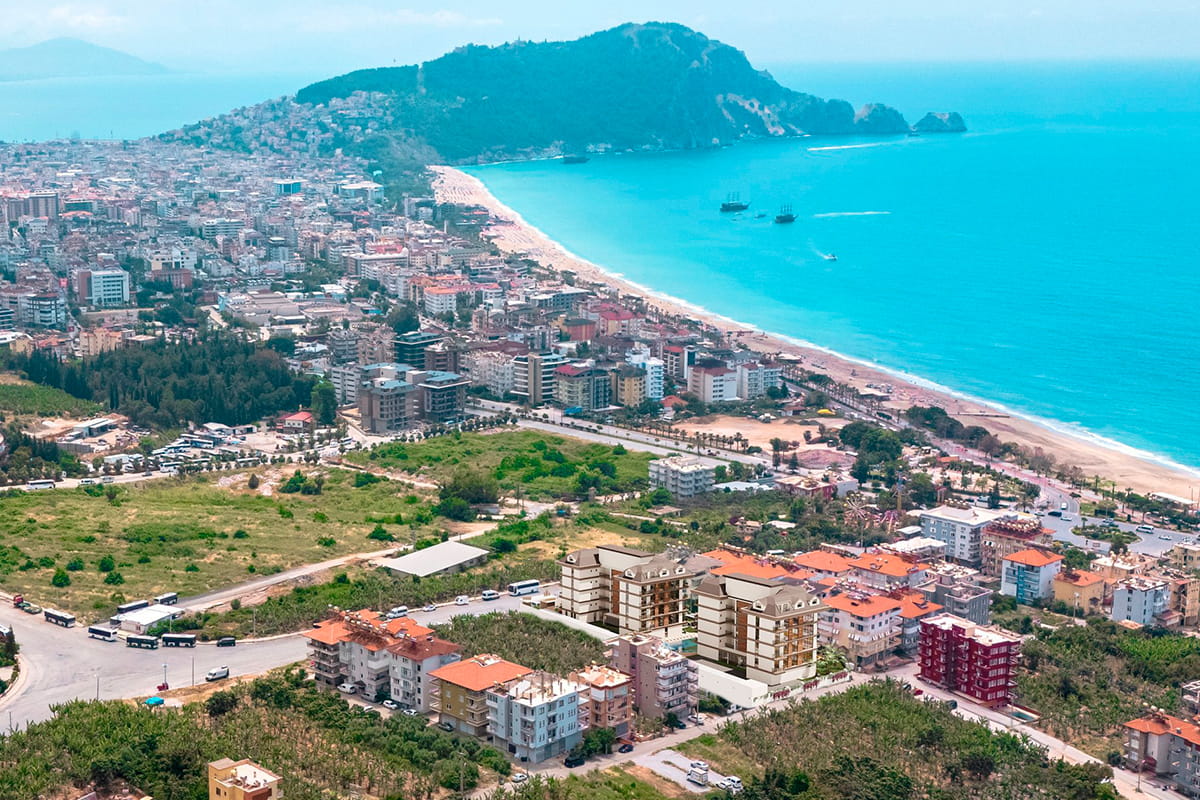
The second restriction concerns the address. The migration authority closes individual neighborhoods (mahalle) to foreign registration where the share of foreign residents exceeds 20%. The decision is taken not at city or district level but at the level of a specific address, so the status of the neighborhood is checked before the deal. In 2026 some of the closed neighborhoods reopened — in Alanya these are Mahmutlar, Kestel, Avsallar and Kargicak. For the rest of the locations released from restrictions, see the separate review of residence permits in Turkey’s restricted areas.
"The $200,000 threshold is calculated from the licensed appraiser’s report, not from the price in the contract. The two figures often differ, and the gap comes to light at the land registry. It is worth ordering the appraisal before paying a deposit," says an expert in Turkish property transactions.
Residence permit and citizenship through a property purchase
Buying a house in Turkey allows a foreigner not only to obtain a residence permit but, in certain circumstances, to apply for citizenship under a simplified scheme. Since 2023 the residence permit threshold has been the same nationwide — $200,000 by appraised value. For a Turkish passport, investors must buy property worth at least $400,000 and keep it for three years.
Ikamet for work
People officially employed in Turkey do not need to file a separate residence application. A work permit together with an employment contract is sufficient ground for legal residence. The validity of such a permit is tied to the employment contract, and the employer arranges it through the Ministry of Labor and Social Security.
Residence permit for students
A residence permit is granted to foreign students enrolled in local colleges and universities. It is issued for the period of study, or for 1 year with the option to extend if the course lasts longer. The student may live in the country legally throughout the course. The permit covers the student only.
Ikamet in Turkey: new rules and requirements for applicants
The requirements for applicants have been revised several times. For 2026 the list looks like this:
- health insurance covering the entire validity of the permit — mandatory for all applicants under 65, not required after that age;
- a Turkish tax number (vergi numarasi) — issued free of charge at the tax office or online;
- confirmed income: 1.5 times the minimum wage for the applicant, which is 42,112.50 TL ($871) per month, plus one minimum wage of 28,075.50 TL ($581) for each family member;
- owned housing or a notarized rental agreement — an ordinary agreement with the landlord is no longer accepted;
- an address in a neighborhood open to foreign registration;
- for a family residence permit, the sponsor must have lived in the country for 1 year or more;
- no criminal record over the past 5 years for all family members, confirmed by a certificate;
- no dangerous infectious diseases, confirmed by a medical certificate.
If an applicant has no insurance, no tax number or no proof of income, the application will not be accepted or reviewed.
The minimum wage used to calculate the income threshold has been 28,075.50 TL net ($581) and 33,030 TL gross ($683) since January 1, 2026.
The largest groups of residence permit holders in Turkey are citizens of Turkmenistan (15.2% of all permits), Azerbaijan (7.8%) and Syria (6.8%). Russians are among the top three for family residence permits.
The application procedure
To obtain a residence permit in Turkey, you go through the procedure described below.
Collecting and preparing documents
Preparing the package of papers is one of the most important stages. The applicant must have:
- an application form signed by the applicant or an authorized representative;
- a passport or equivalent document, original and copy, valid for at least 60 days longer than the requested permit;
- 4 biometric photos on a white background taken within the last 6 months;
- a notarized rental agreement or the TAPU for your own property;
- proof of income sufficient for the period of stay;
- a tax number;
- valid health insurance;
- receipts for the state fee and the cost of the card.
Depending on the grounds for the permit, the list may be extended.
Applying to the migration office
Once the papers are ready, you submit an electronic application on the migration authority website, e-ikamet.goc.gov.tr. The interface is straightforward and comes with prompts. After sending the application you can check the documents there and make sure they are correct. The site shows the office you need to visit, and the applicant chooses the appointment date. On that day you come to the address given and hand over the package for review.
Once the application has been filed, the applicant may stay in the country legally without breaching the visa regime. That works on one condition: the application was sent before the visa-free period or the previous ikamet expired.
The cost of a residence permit
An ikamet involves certain expenses. Here is what the budget for one adult with a one-year permit looks like in 2026:
| Expense | Amount | Comment |
|---|---|---|
| Residence permit card | 964 TL ($20) | The same for everyone, with no exceptions by citizenship |
| Health insurance | 2,700-7,200 TL ($56-150) per year | More expensive with age, mandatory under 65 |
| Notarization of the rental agreement | about 3,100 TL ($65) | Not needed for owners with a TAPU |
| Notarized translation of documents | from 1,500 TL ($32) | Bank statement, certificates, references |
| Biometric photos | 150-250 TL ($3-5) | 4 pieces |
The minimum comes to about 5,400 TL ($110) per adult, or around 8,500 TL ($175) with a notarized rental agreement. On top of that you pay the residence permit fee: it is set on the principle of reciprocity, so it differs by citizenship and the exact amount is confirmed at the migration office. It is wiser to budget 11,000 TL ($230): insurance for applicants over 50 costs noticeably more, and some documents have to be translated twice. The calculations use the rate of 48.33 TL per dollar as of September 2026.
Processing times
Collecting and preparing the papers takes about a week. Applications with correctly completed documents are reviewed within 90 days at most. Once approved, the card is delivered by PTT, usually 1 to 3 weeks after the decision, and the status can be tracked by the application number on the migration authority website. If the application is refused, the applicant receives an official notification stating the grounds for the decision.
Where applications usually fail
A refusal rarely has to do with the applicant personally. Applications usually stumble over four formalities, each of which can be checked in advance.
The first is the address. If the neighborhood is closed to foreign registration, the application will be rejected regardless of income, insurance or grounds. The status of the mahalle is checked with the migration authority before signing a rental agreement or paying a deposit on an apartment.
The second is the rental agreement. An ordinary agreement with the owner will not do; it has to be notarized, and the address in it must match the address registry letter for letter.
The third is income. You need 42,112.50 TL per month for the applicant, confirmed by a statement for the last 3 months. A one-off transfer to the account on the eve of the application does not settle the question.
The fourth is timing. The application has to be sent before the visa-free period or the current ikamet expires, and renewals are filed 60 days before the card runs out.
"Applications are usually turned back not because of money or the applicant’s record, but because of an address in a closed neighborhood and a rental agreement without a notary. Both can be checked in a single day before filing," says the head of a transaction support department.

Validity of the residence permit
The validity of a Turkish residence permit depends on the grounds for it. A short-term permit is issued for a maximum of 2 years at a time (up to 5 years for investors), a family permit for up to 3 years, and a student permit for the duration of the course. After 8 years of continuous residence you can request a long-term permit, which has no expiry date. When the current permit runs out, it can be extended without leaving the country. The renewal application is filed 60 days before the current card expires. To do that, create an application in the "Extension" section of the migration authority website and choose a convenient appointment date. After the interview and the document check, the migration officer decides whether to extend the permit or refuse it.
Ikamet refusal: specifics and reasons
Turkish officials are generally well disposed towards those who want the legal right to live in the country, so applicants with valid grounds and a properly prepared package usually receive the card. Reasons for refusal may include:
- an incomplete set of documents;
- errors in one or more papers;
- submitting forged documents or false information;
- an entry ban;
- unpaid fines for visa violations;
- no proof of solvency;
- criminal charges or a criminal record;
- no grounds for living in the country;
- a possible threat to state or public security;
- diseases that pose a danger to the public.
This is why the documents deserve particular attention.
If a refusal does arrive, the order of actions is as follows:
- the notification states the reason and the decision code — that is where the analysis starts;
- when the migration authority allows time to correct the documents, it is usually 30 days;
- in the event of a final refusal, the foreigner must leave the country within 10 calendar days;
- the decision can be appealed to an administrative court within 60 days of the notification.
Ikamet rules: what changed in 2026
- the threshold for a residence permit through property is $200,000 by appraised value, the same nationwide (in force since October 16, 2023); the former limits of $50,000 and $75,000 have been abolished;
- foreign registration is restricted at neighborhood level: a mahalle is closed once the share of foreign residents exceeds 20%. In 2026 some neighborhoods reopened;
- the income threshold is tied to the minimum wage: since January 1, 2026 it has been 42,112.50 TL per month for the applicant;
- the residence permit card costs 964 TL, an amount set by the decree of December 24, 2025;
- only notarized rental agreements are accepted;
- health insurance is mandatory for applicants under 65.
The next revision of the figures is due in January 2027, when Turkey approves a new minimum wage and new state fees.
Popular questions
How much does an ikamet in Turkey cost in 2026?
At least about 5,400 TL ($110) per adult for a one-year permit, or around 8,500 TL ($175) with a notarized rental agreement, plus the residence permit fee, which depends on citizenship. The main items are the card at 964 TL, insurance, the notary and translations.
Can any property purchase qualify for an ikamet?
No. The property must be residential, its appraised value at least $200,000, and its address in a neighborhood open to foreign registration.
How long does the card take after the documents are filed?
The decision is made within 90 days, and after approval the card arrives by PTT, usually within 1 to 3 weeks. Throughout that period the applicant stays in the country legally.
Does a pensioner need health insurance?
Applicants under 65 must have insurance; after 65 it is not required.
What should you do if the ikamet is refused?
Read the reason in the notification. In the event of a final refusal you have 10 calendar days to leave the country and 60 days from the notification to appeal to an administrative court.
We will help you buy property and get an ikamet
Buying local property remains one of the most common grounds for a residence permit in Turkey. You can choose a suitable home on our website right now. We offer a wide selection of listings from developers, agencies and private sellers. Pick the right property, close the deal and you have your ground for an ikamet. Start your search for quality property in Turkey today.