




Turkey surprises travelers every time and gives them new emotions. Fascinating Cappadocia, the warm Antalya region, the picturesque Aegean coast with a characteristic Greek flavor – each part of the country is beautiful in its own way. How are things with life safety and travel in the country today? Let’s talk about it below.
Content:
- Crime rate in Turkey
- The safest areas of Turkey
- Security in Turkey for tourists
- Features of local laws
- Emergency phone numbers in Turkey
- Earthquakes: the main natural risk
- Safety of a property transaction
- What changed by 2026
- Popular questions
- Buying property in Turkey
Crime rate in Turkey
According to statistics, Turkey sits in the middle of the global ranking: the Numbeo crime index stood at 41.33 in September 2026, with a safety index of 58.67. According to Turkish National Police, the most frequent crimes in the country are petty theft and pickpocketing. It is mainly recorded in crowded places, markets and tourist locations. In addition, there are cases of credit card fraud.
Perceived safety among residents breaks down like this: walking alone in daylight scores 73.72 out of 100 and walking at night 48.78. Concern about home break-ins sits at 36.25 and about being attacked at 42.32. In other words, people feel comfortable during the day and stay more alert in the evening, as in any large city.
At the same time, the vast majority of travelers and expats feel calm and relaxed in Turkey. The tourist flow says something too: Turkey welcomed 64 million foreign visitors in 2025 and moved up to fourth place in the world by number of arrivals. It is not surprising that buying real estate in Turkey is so popular with expats.
It is worth mentioning about the mentality of the Turks themselves. Locals are very fond of children and animals. They are very smiling, kind and friendly. They treat travelers well, they are always ready to answer questions, suggest the way or help in some other way. If you have any problems, you can safely contact people on the street and count on their participation. In megacities and tourist cities, when law enforcement officers are called, the wait is on average 5-10 minutes. It should be noted that police officers in Turkey are treated with trust and respect.
The safest areas of Turkey
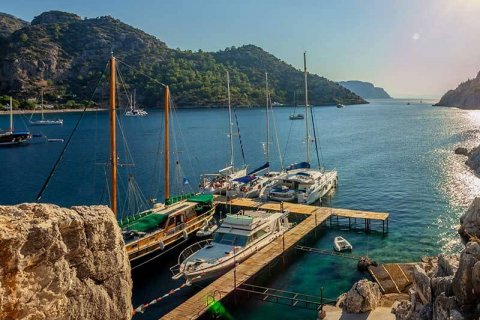
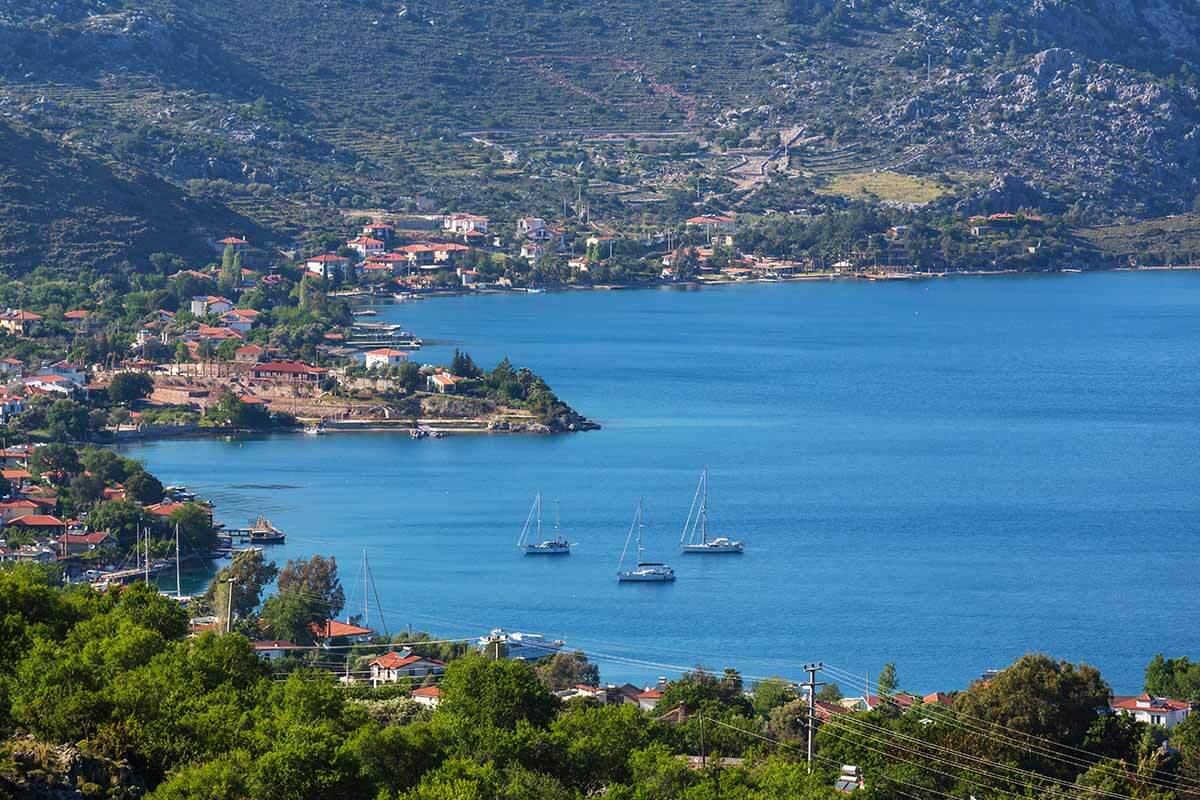
The Antalya region is considered one of the safest in Turkey. The crime rate is very low here. According to numerous studies, this location is one of the safest for both tourism and life. Safe regions include cities and provinces of the Aegean coast: Cesme, Mersin, Izmir and Marmaris.
At the same time, there are areas in Turkey that should be avoided. All of them are located in the south-east of the country. This is above all the strip along the Syrian and Iraqi borders: foreign travel advisories recommend staying more than 10 km away from the Syrian border and avoiding trips to Sirnak, Hakkari, Mardin, Sanliurfa, Kilis and Hatay. Tourism is poorly developed in these areas. Foreigners do not seek to buy real estate there.
The larger cities of the south-east — Gaziantep, Diyarbakir and Van — go about ordinary life and receive domestic tourists, but mass holiday routes do not run there. Before traveling to the region, check the current advisory of your own foreign ministry: it changes with the situation in the neighboring countries.
Security in Turkey for tourists
Even coming to Turkey alone, you can be absolutely calm. For tourists, the situation is very favorable. The atmosphere is calm, relaxed and friendly. At the same time, it is important to observe basic safety rules, as in any other country. For example:
- do not walk alone at night in poorly lit places. If you return home at night, choose busy streets;
- be careful when traveling in empty public transport; especially at night and in the evening;
- keep valuables with you: passports, jewelry and money;
- do not spread to unfamiliar people that you are traveling alone;
- take a look around when withdrawing money from ATM cards and hide the PIN code you enter.
As for women’s clothing, there is no strict dress code in Turkey. However, the country is considered Muslim. Therefore it is not recommended to wear overly revealing things so as not to attract attention; especially if you are in Turkey unaccompanied by men.
Features of local laws
In addition to security requirements, it is necessary to keep in mind the legal prohibitions in force on the territory of Turkey. The main ones are as follows:
- do not take pictures of some government buildings and military installations;
- do not drive a car when you are drunk. Any amount of alcohol detected by the authorities in the blood entails a fine and confiscation of a driving license;
- do not speak negatively about the Turkish government. There is strict censorship in the country. Criticism is regarded as a crime.
Couples in love should not show their feelings in public. It is better to refrain from excessive emotions in front of outsiders. This is not regulated by law in any way, but it is strongly recommended.
Emergency phone numbers in Turkey
If necessary, you can always call 112 — since 2021 this is the single number for every emergency service: ambulance, police, fire and rescue. It is also useful to know the hotline number for foreigners – 157. It allows you to solve issues related to migration, receive assistance in protecting your rights and solving various problems, and it works in several languages, Russian included. For questions about medical care there is the Ministry of Health line on 184. A full breakdown, including the Turkish address format the operator will ask for, is collected in our article on emergency numbers in Turkey.
Earthquakes: the main natural risk
Any conversation about safety in Turkey is incomplete without seismic risk. There are 485 active faults running through the country, and 45 provinces and 110 districts sit in a zone of heightened risk.
The AFAD seismic hazard map, in force since 2018, assesses risk point by point rather than by whole regions — down to a specific neighborhood. That makes "is this province dangerous" the wrong question: neighboring districts of the same city can differ noticeably.
The first-degree risk group includes Izmir, Balikesir, Manisa, Mugla, Aydin, Denizli, Bursa, Yalova, Kocaeli, Sakarya, Duzce and Hatay. The Mediterranean coast around Antalya and Alanya is considered calmer, but there are no entirely risk-free zones in the country.
What this means in practice:
- building codes. An updated seismic construction regulation has applied since 2018, and buildings put up under it are designed for serious tremors. When buying, check the year of construction: anything built before 2000 is a separate risk category;
- DASK insurance. The compulsory earthquake policy costs 500 to 3,000 TL a year and is required both to register the sale and to connect utilities;
- checking the address. Risk for a specific plot is read from the AFAD map, not from the name of the province;
- urban renewal. Programs to demolish and rebuild older stock operate in risk zones, and that is worth considering when buying on the secondary market.
"Every second buyer asks about earthquakes, and the right answer is not 'it is safe here' but 'look at the year of construction and the fault map for that exact address'. The difference between a 1995 building and a 2020 one is fundamental," says an expert in Turkish property transactions.
Safety of a property transaction
For a home buyer the risks look different from a tourist’s: they lie in the paperwork rather than on the street.
A deposit with no contract. Money changes hands only under a written agreement; verbal arrangements with a seller or an intermediary protect nobody.
Encumbrances on the property. A mortgage, a seizure or the previous owner’s debts show up in the land registry extract — request it before the deposit, not after. How to read the document is covered in our article on the TAPU.
Cash payments. Transactions with foreigners are settled by bank transfer with the currency exchanged through a Turkish bank; cash leaves the buyer without proof of payment and closes the door to the citizenship program.
An inflated valuation. The price is confirmed by a licensed appraiser’s report, which is mandatory in deals with foreigners. It also shows whether the seller’s price is out of line.
Utility bills and maintenance fee arrears pass on with the apartment, so clearance certificates are collected before signing.
What changed by 2026
- The Numbeo crime index is 41.33 against a safety index of 58.67 (September 2026).
- Turkey received 64 million foreign visitors in 2025 and rose to fourth place in the world by arrivals.
- All emergency services operate through the single number 112.
- The AFAD seismic hazard map assesses risk by specific address rather than by province.
- DASK earthquake insurance is required both for the transaction and for connecting utilities.
Popular questions
Is it safe to travel to Turkey in 2026?
Yes, for the tourist and resort regions. The Numbeo safety index stands at 58.67 and the country receives tens of millions of guests a year. Caution applies to the border strip in the south-east.
Which regions of Turkey are considered the safest?
The Antalya coast and the Aegean provinces — Izmir, Mugla, Mersin and their resorts. That is also where most transactions by foreign buyers take place.
How dangerous are earthquakes?
The risk is real: 485 active faults and 45 provinces in a heightened-risk zone. It is reduced by choosing a building constructed to the 2018 standards, checking the address on the AFAD map and taking out compulsory DASK insurance.
Which number do you call in an emergency?
112, the single number for every service. For a foreigner’s questions there is the 157 line, available in Russian among other languages.
Is there any risk in buying property?
The main risks are in the documents: a deposit without a contract, encumbrances on the property, cash settlements and the previous owner’s debts. All of them are removed by checks made before the deal.
Buying property in Turkey
Turkey, which occupies 783,600 km², is called the "gateway between East and West" because of its location at the intersection of two parts of the world. The rich culture dating back to the ancient civilizations of Anatolia, delicious food, hospitable locals and many attractions have made it one of the most visited countries in the world. At the same time, the state is now attractive both for tourism and for permanent residence.
If you are thinking about buying a property in Turkey for living or investment, we offer you to get advice from our specialists right now! Just write to us and the experts will tell you how to buy a villa, house or apartment in Turkey on favorable terms. See you soon!